
The birth of punk in the UK has been covered to death. There are books and documentaries on it, and rightfully so. It shook up the music word and created some of the best tunes ever laid down to wax. But just like in the USA, the second wave is more interesting to me.
In America, the second wave was a narrowing. Bands trimmed the fat and got faster, less melodic, and more aggressive. USHC was here. In the UK, the second wave was an expansion in many ways. The music branched out in multiple directions and different styles and ideologies emerged. Although everything was just punk then, you can see the beginnings of subgenres that are still relevant today: D-beat, anarcho, UK82, street punk, hardcore.
The first wave of punk was much bigger in the UK than in America. Bands like The Clash, The Damned, The Jam, and even The Vibrators all made the top 50 of the national charts with their debut LPs. Never Mind The Bollocks by the Sex Pistols hit #1 in November of 1977 and was in the top 10 for eight weeks. Compare that to America where the only time the Ramones broke the Top 100 in the ‘70s was with their second record, Rocket to Russia, in 1977. It peaked at #49 and spent eight weeks on the chart. A band like the Dead Boys didn’t even sniff the top 100 (#189 peak for their 1st LP). L.A.M.F, Blank Generation, The Incredible Shrinking Dickies, and (GI) didn’t crack the top 200.
Even with the smashing successes of UK punk records in ‘77/’78, the major labels’ interest in signing new punk bands was waning just a couple years later. By the 1980s, the majors that were interested in punk in its early years had moved on to new wave or post punk. In response, the UK, like many other places across the globe, saw the rise of independent record labels. Some like No Future, Crass, Clay, and Riot City are now legendary and are heavily represented in this tournament.
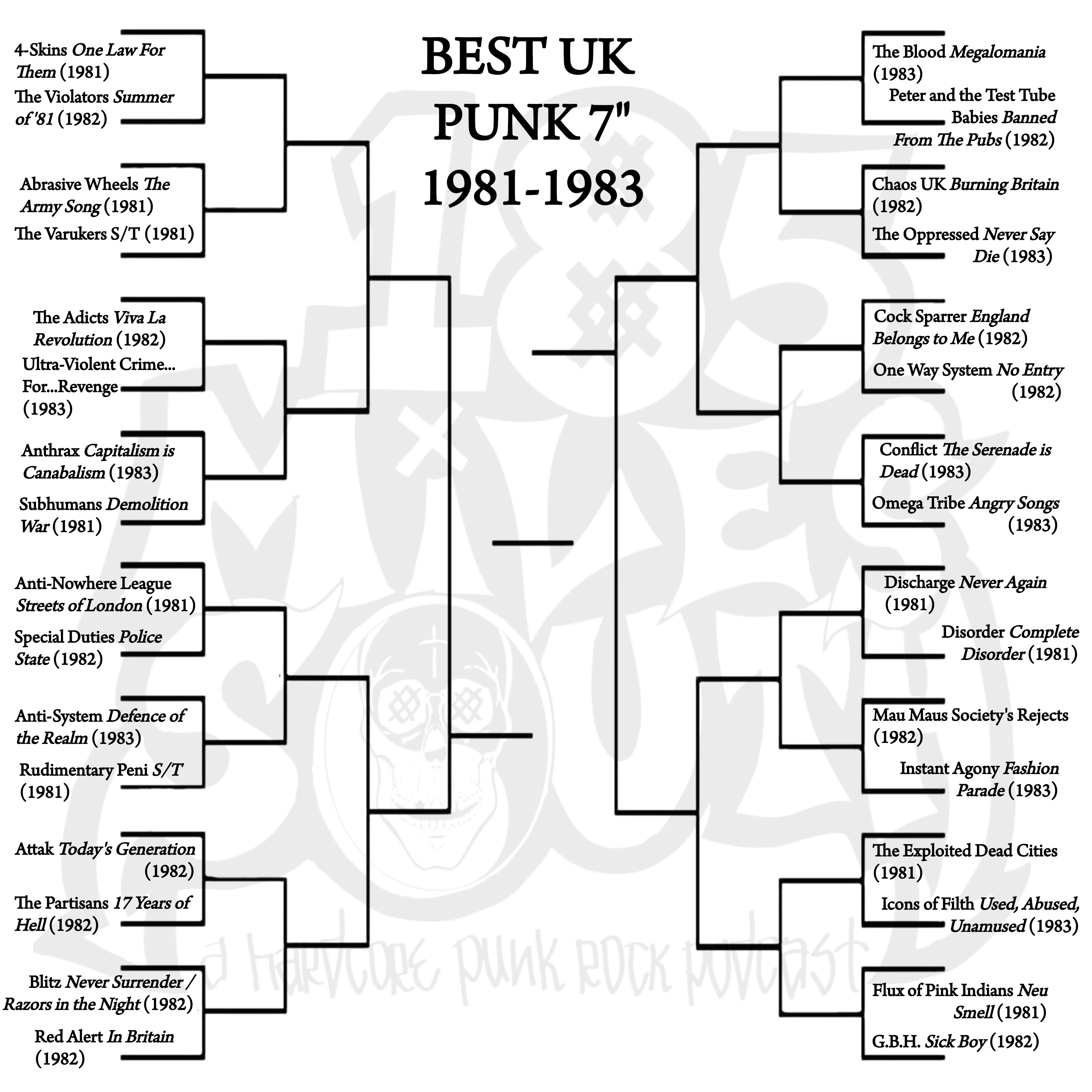
The tournament bracket was put together by me with help from Dan Sant, Mark Boardman, Jon Westbrook, and Dave Ackerman. I tried to have the best representation here from a multitude of styles and subgenres that were firmly planted in the second wave of UK punk. The year selection of 1981 to 1983 mirrors our USHC tournament, even if it eliminated some of my favorite records like UK Subs Warhead (1980) and Broken Bones Decapitated (1984). Tons of things were left off to narrow this down to 32. Some on the bubble were Chron Gen, The Business, Toy Dolls, Chaotic Discord, The Skeptix, Uproar, Major Accident, Amebix, Demob, Dead Wretched, etc. Overall, I’m happy with the bracket and think it paints a good picture of the region and era.
Much of the information in this post is from two terrific books by Ian Glasper, Burning Britain (2004, although I’m referencing the 2014 version) and The Day The Country Died (2006).
Alright, let's get into it...
4-SKINS ONE LAW FOR THEM (1981) vs. THE VIOLATORS SUMMER OF ‘81 (1982)
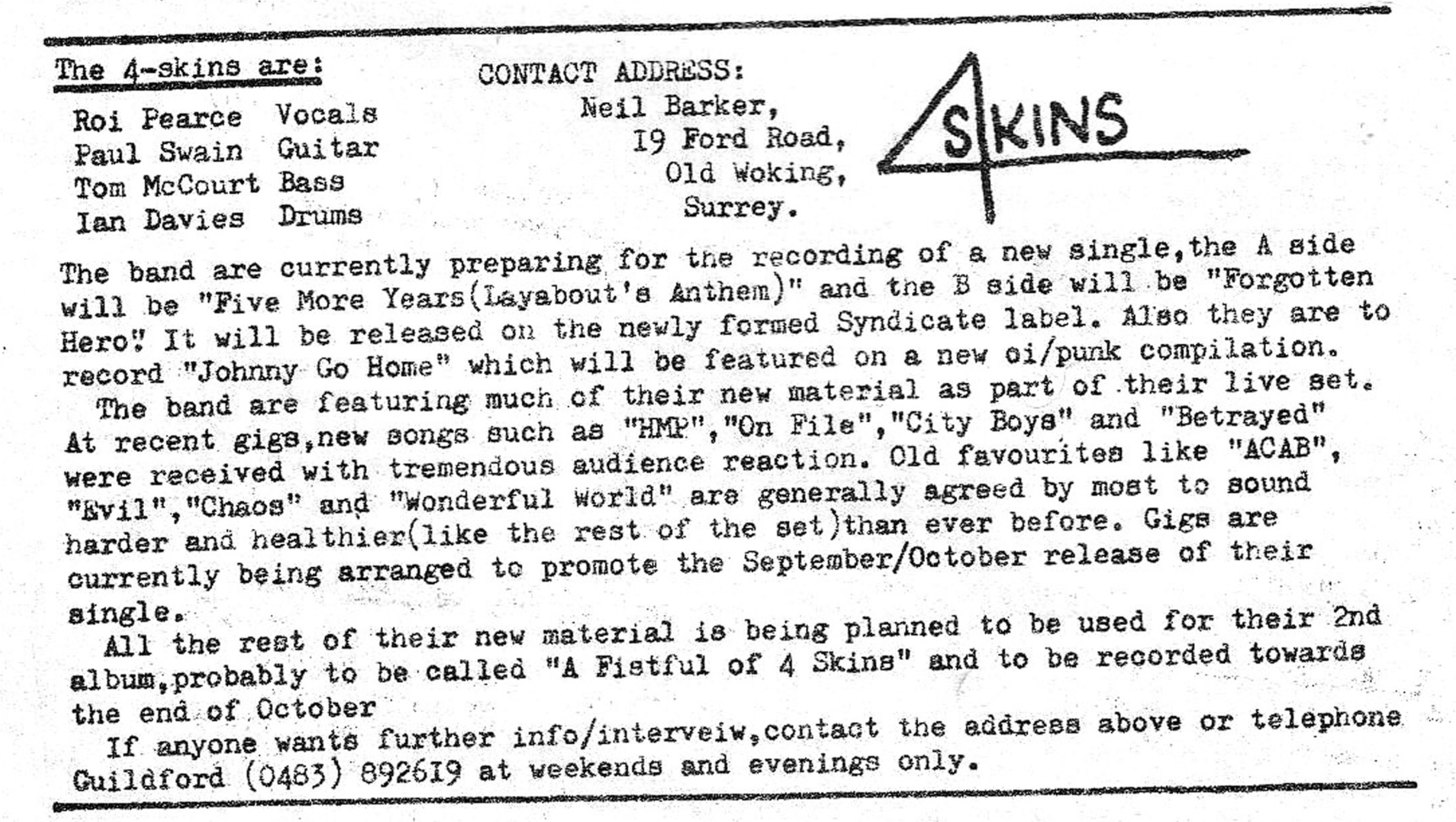
Garry Bushell was in the crowd at the first 4-Skins gig in the summer of 1980. He was impressed enough by their set that he invited them to be on the soon to be released compilation, Oi! The Album that came out later in the year. Guitarist, Tom McCourt, described their sound as “punk but faster. A lot heaver and more basic, like Sabbath meets The Ramones, with terrace chants” (Glasper, 2014, p. 440). Their first single, One Law For Them, was released on their own label, Clockwork Fun, and charted at #4 on the independent charts. It was distributed by Secret Records who signed them officially after its release.
The 7” is totally propped up by the title track, which is one of the best and most recognizable songs from UK punk’s 2nd wave (“one law for them, another law for us”). The B-side is more of a downtempo pub rock tune that I could take or leave, depending on my mood.
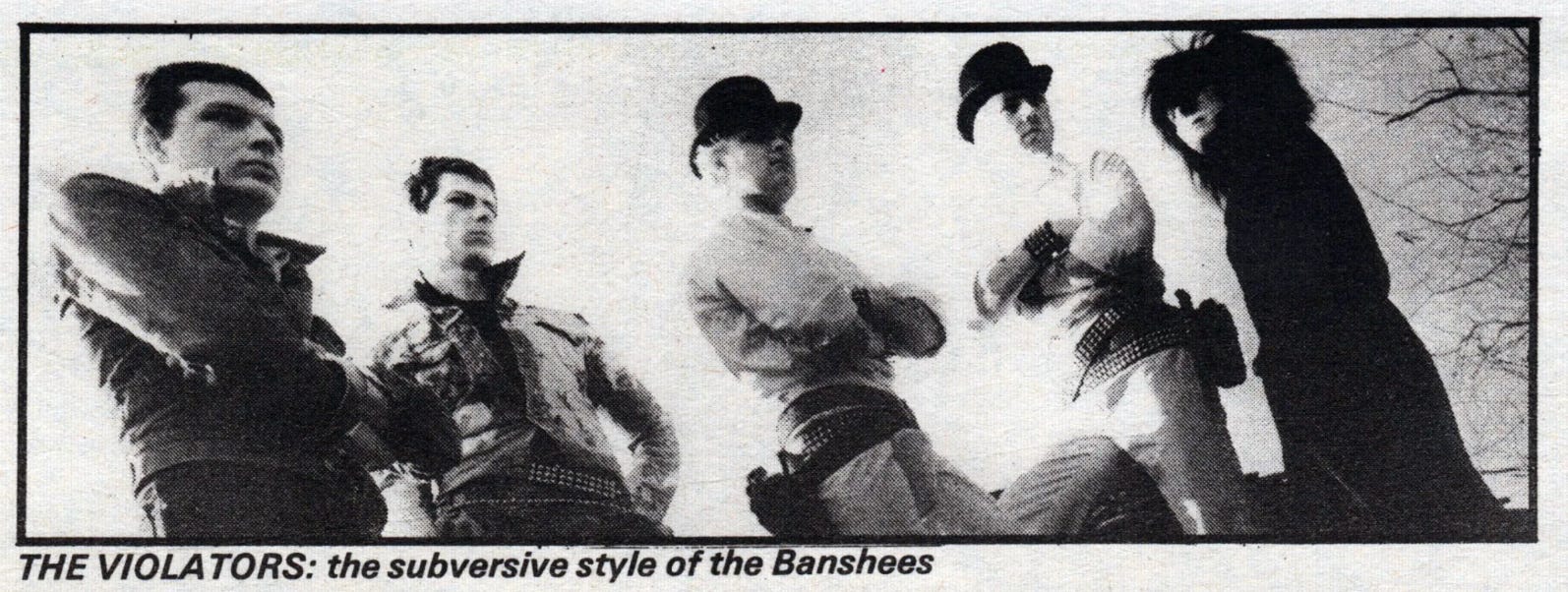
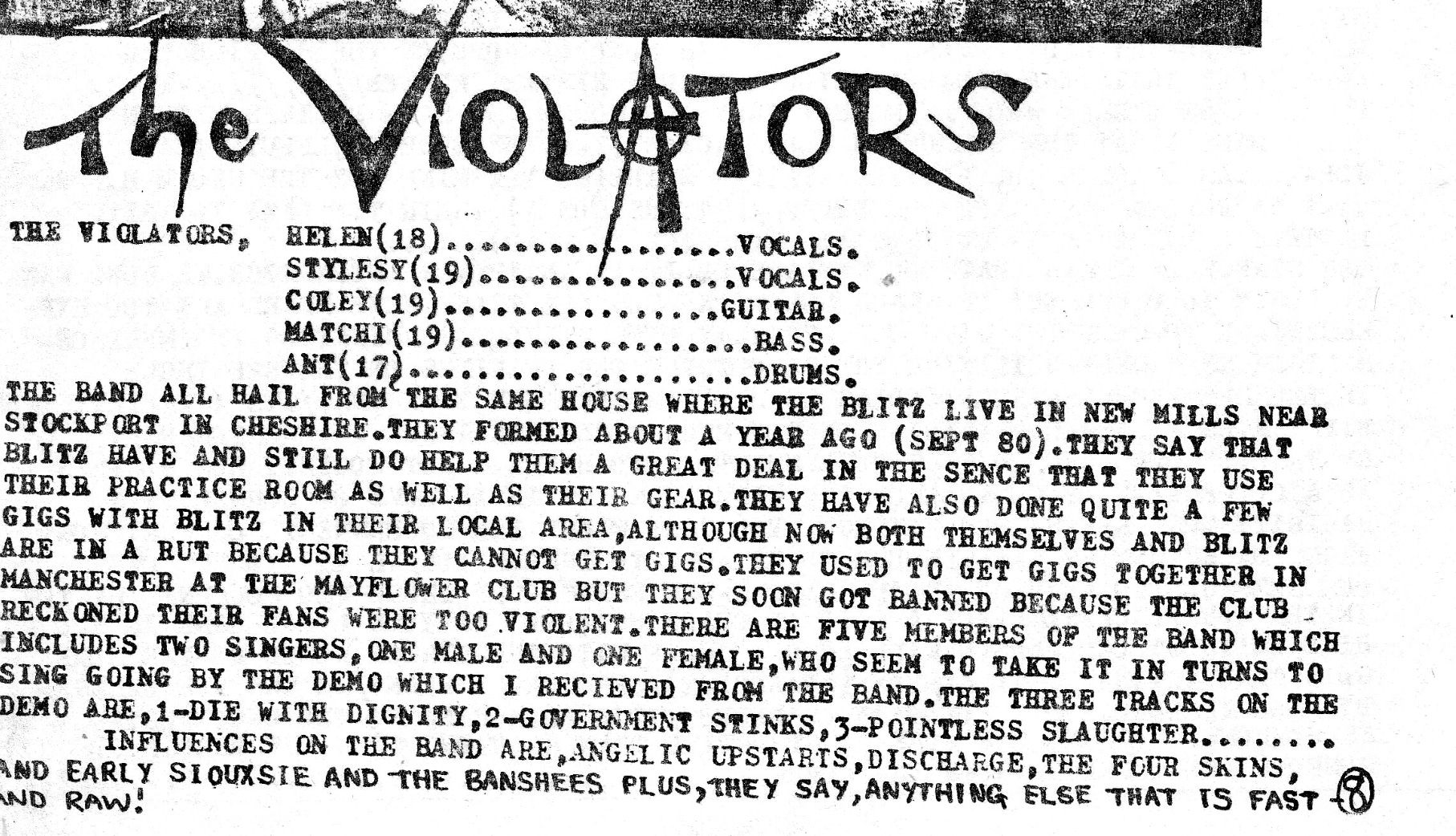
The Violators were born in 1979 out of a band called The Dismal Sports. One of their two-person vocal contingent, Shaun “Cess” Stiles says of the band:
“Being close to Manchester we experienced its first ‘Renaissance’. We’d go to the Factory and clubs like it to watch bands such as Joy Division, PIL, Magazine, The Fall, the so-called post-punk bands. To us they were punk, but they were just not permitting themselves to be typecast. We still loved the early bands too, but, apart from The Buzzcocks, the post-punk set up was what gave Manchester its unique pulse. The north had a more DIY feel to the movement than the south – the London scene seemed driven by major record labels until the hardcore punk thing occurred.” (Glasper, 2014, p. 128).
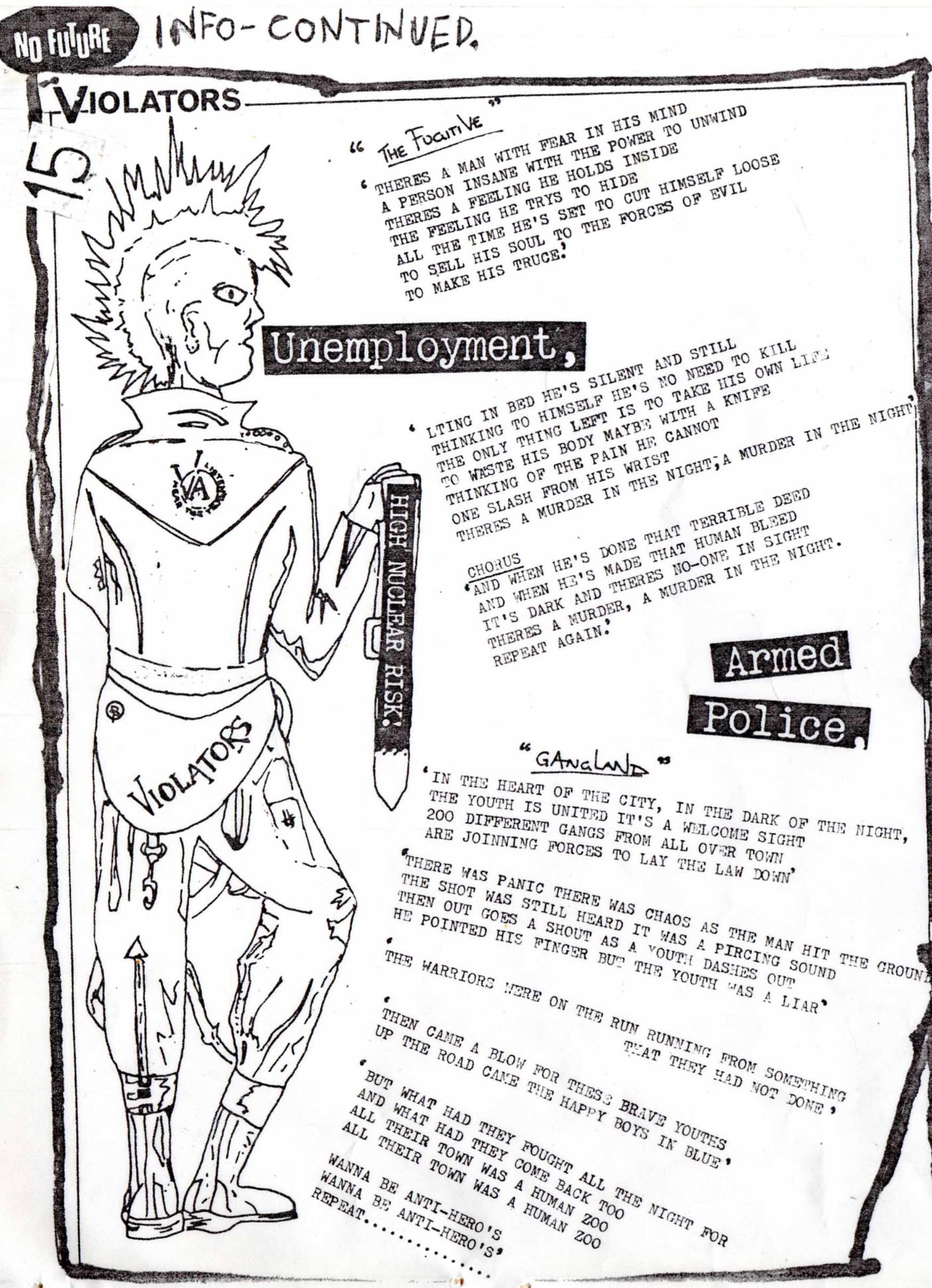
After the first Blitz 7” came out, The Violators mailed their demo to No Future Records who included a couple of the songs on their compilation A Country Fit For Heroes in 1982. In April of the same year they released their Gangland 7” on No Future, and followed it up in December with the 7” in this tournament, Summer of ‘81.
Their 2nd 7” maintains the original Violators sound but presents sleeker, more honed in songwriting. “Summer of ‘81” is similar to “Gangland” with Helen Hill’s haunting voice captivating from the beginning of the track, but this time around she handles 100% of the vocal duties. Cess handles vox on the B-side track (“Live Fast - Die Young”), probably their most raucous tune.


ABRASIVE WHEELS THE ARMY SONG (1981) vs. THE VARUKERS S/T (1981)
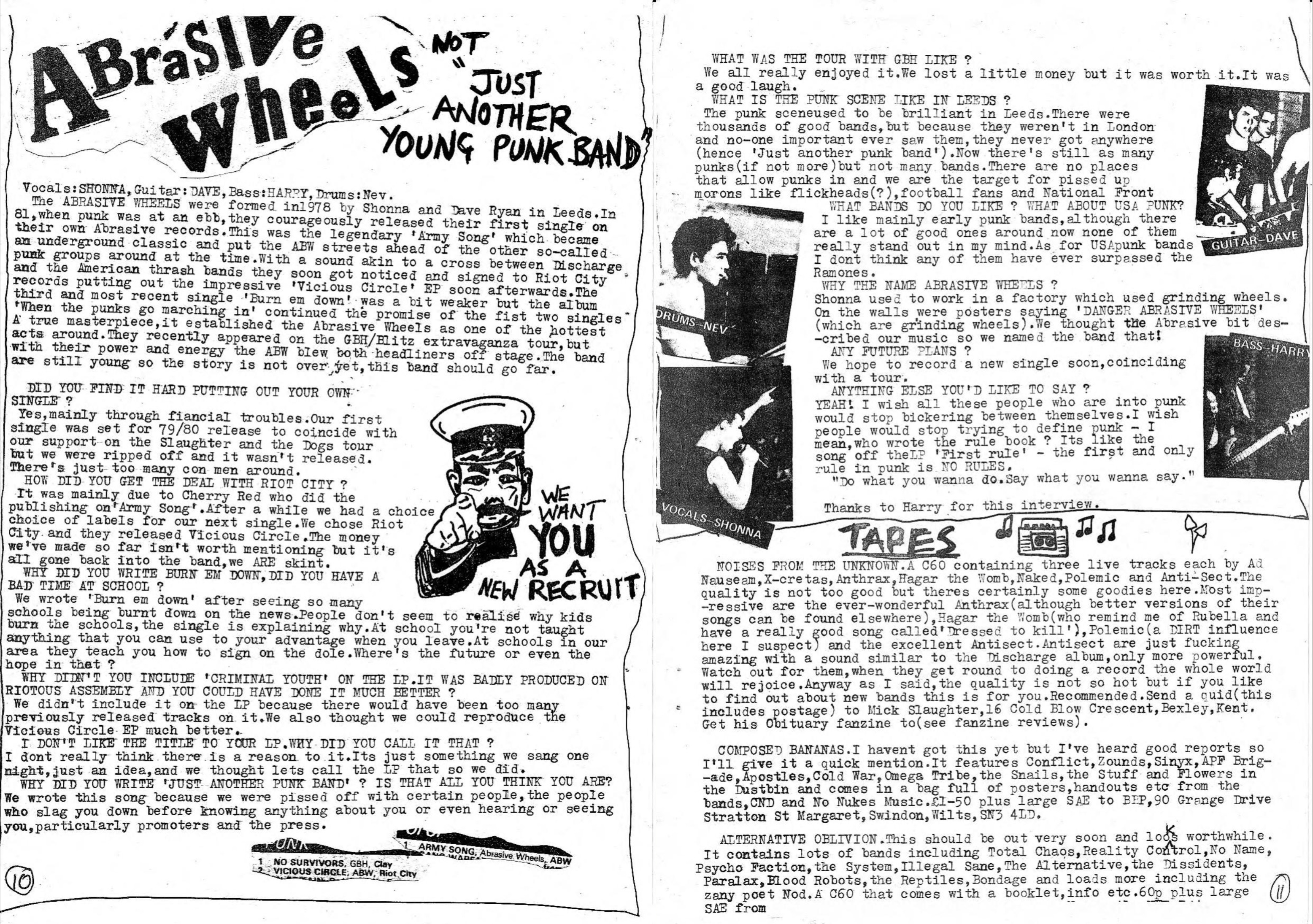
The first Abrasive Wheels 7” was a completely DIY affair. Vocalist Shonna and guitarist Dave decided to start a label called Abrasive Records. Then came the hard part: figuring out how to scrounge up £600 to put out the record. Dave sold his motorcycle but Shonna didn’t have anything of value to sell, so he just waltzed into a bank and told them that he was the managing director of Abrasive Records. He ended up getting a loan for his half. They sold through the first press of 3,000 quickly before it was picked up and repressed by Riot City.
All three tunes on the record are catchy and anthemic, with the title track being one of the biggest ear worms of the era (“You gotta fight, fight, for what you want”). The recording is perfect: clear enough to hear everything but with enough of that early ‘80s stank that can never be recaptured. If the 7” came out on No Future and they were called an Oi! band, you wouldn’t think twice but Shonna thought different:
“The press were calling us ‘Hardcore’ or ‘Oi’ or whatever, and we were thinking ‘What the fuck are they going on about?’ We didn’t like labels anyway, but as far as we were concerned, we were just a fuckin’ punk rock band. The press wanted to pigeonhole us with all the other bands that were emerging at the time, but we were just writing what was coming out naturally, what we felt; there was nothing contrived about us at all. We were just angry young punks, all of us on the dole, all of us disillusioned with society. We had no respect for reputations or authority. As far as I’m concerned, real punk music comes from the streets; it doesn’t matter whether it’s fast or slow, it’s the sentiment behind the music that’s important. For us it was always a working class thing, and maybe that’s why we got called an ‘Oi’ band in the press.” (Glasper, 2014, p. 128).
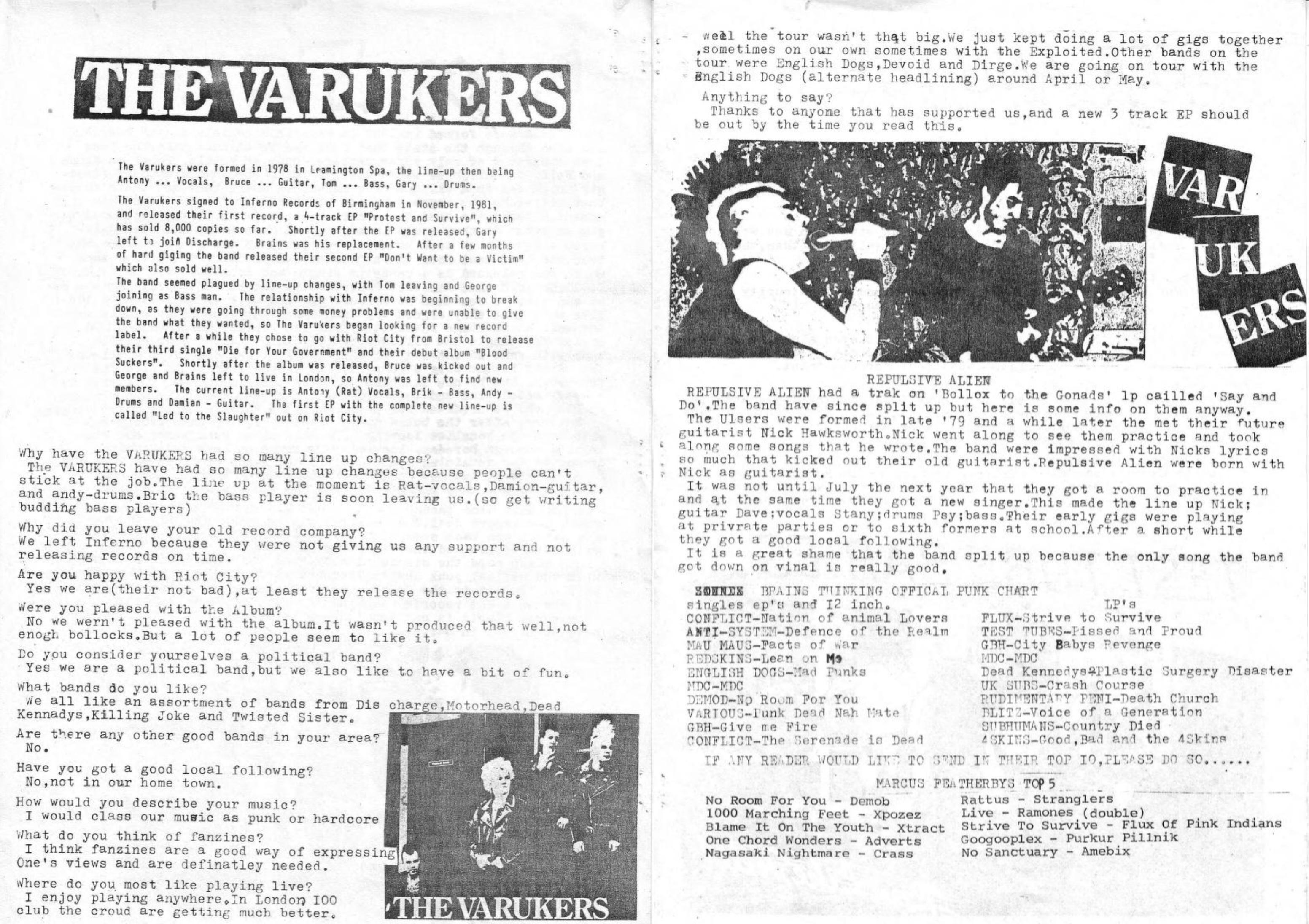
The Varukers represented the more aggressive side of punk although their origin wouldn’t point directly to that.
“Basically we formed The Varukers because I saw The Sex Pistols on ‘Top Of The Pops’ and wanted a piece of that!” exclaims Rat.” (Glasper, 2014, p. 56).
The band formed in Leamington Spa and put out two demos before releasing their debut 7”, the first release on Inferno Records. It was on the UK indie charts just outside of the top 30 for over a month. The record features three ripping hardcore tracks in the Discharge vein and one anthemic midtempo track, “Soldier Boy,” that folks might know from the Punk And Disorderly compilation. It’s kind of hilarious thinking that someone who loved that track off the comp might have bought their debut 7”only to have their wig split by the other three songs, which sound nothing like it.
In the early/mid ‘80s, the Varukers put out a ton of records, all good to great. They’re one of the most consistent bands of the era, even with an evolving sound and constant member changes. After this 7”, drummer Gary Maloney left the band to play in Discharge. After the 2nd 7”, guitarist Tom Lowe left to join Anti-Sect. My favorite material is the era when Andy Baker and Damien Thompson of War Wound were in the band (Led To The Slaughter / Another Religion, Another War). After those records, Damien would leave to form Sacrilege.




THE ADICTS VIVA LA REVOLUTION (1982) vs. ULTRA-VIOLENT CRIME…FOR…REVENGE (1983)
The Adicts formed in Ipswich in 1976 as The Pinz.
“We became The Adicts because The Pinz was such a shit name,” deadpans (drummer) Kid. “At the early gigs we just used to wear punk clothes, but never anything bought, like those posers who went down to Kings Road. After a while though, black came in and it all became boring, so we started to dress in white to be different, and ‘Clockwork Orange’ had been a major influence on us, though not for the violence, more the teenage angst…” (Glasper, 2014, p. 177).
They are one of the most notable UK punk bands due to their longevity. Over four decades after their debut 7”, Lunch With The Adicts, they are still drawing large crowds. For the tournament, we included their 1982 single, Viva La Revolution. The title track and “Numbers” both appeared on their debut LP, Songs of Praise and “Steamroller (My Baby Got Run Over By A),” I believe is exclusive to this 7”. “Viva La Revolution” might be their biggest song, but “Numbers” is probably their best (“I don't wanna be no 1 2 3 4 5 6 7 8”). It’s classic Adicts, tapping slightly into darker melodies while staying anthemic and light hearted.
The Adicts play melodic punk with big hooks and they’re not scared to be theatrical. Beyond their outfits, they also appeared on an ‘80s kids TV show called Cheggers Plays Pop as The Fun Adicts.
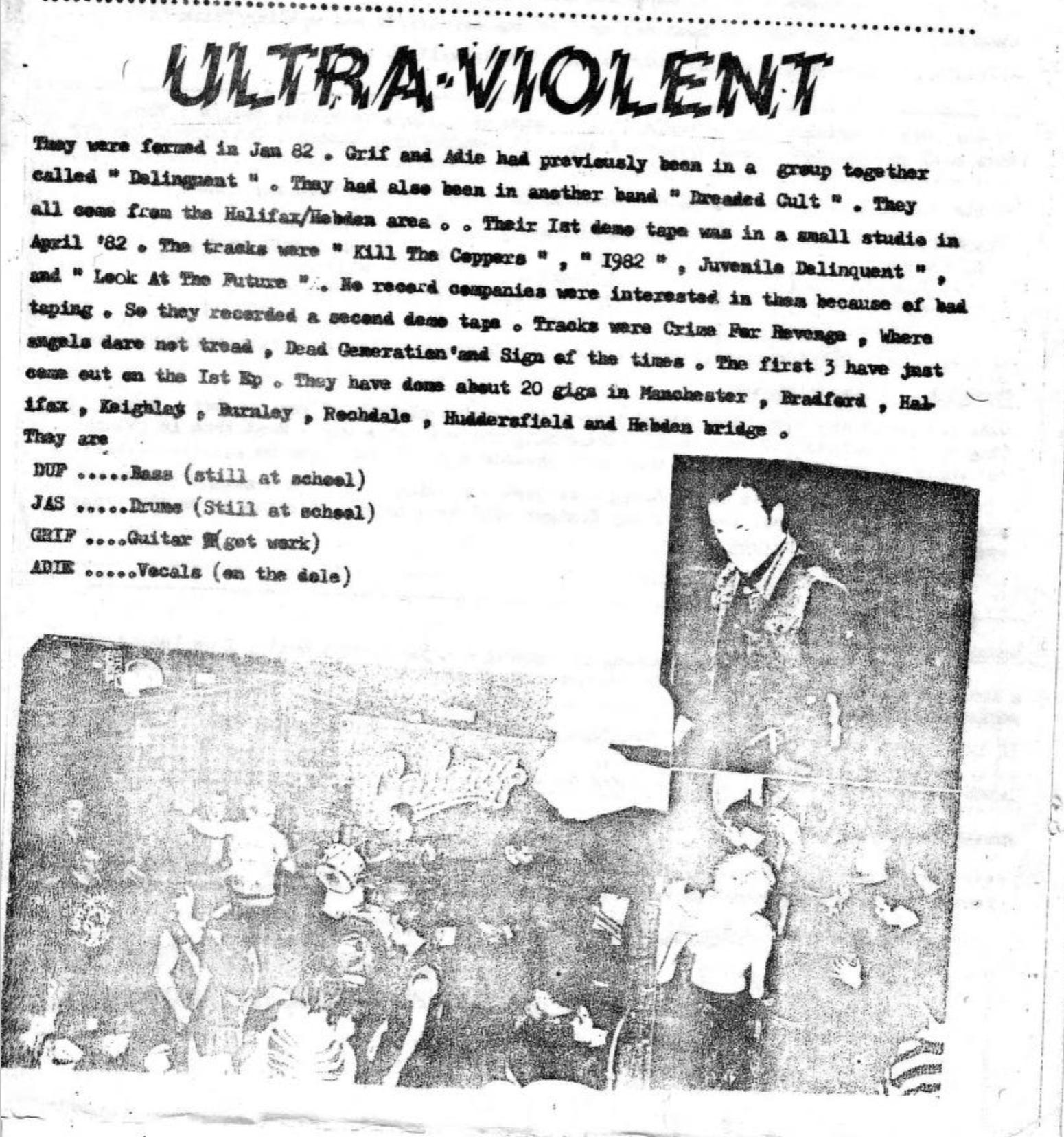
Ultra-Violent put out maybe the meanest sounding hardcore 7” of Britain’s second wave. They had some solidarity with the band Crash from nearby Halifax, who did a record on No Future. Between the two towns there was a small scene of punks who would support them. They did a practice room demo in ‘82 that Riot City Records liked enough to pay for them to enter a real studio and record the Crime For Revenge 7”.
The title track and “Dead Generation” are two of the most rabid and ferocious hardcore tracks of the era. “Where Angels Dare Not Tread” plods along but the lyrics project a gritty poetry that carry the track. The 7” got Ultra-Violent on bigger gigs opening for bands like Abrasive Wheels and the UK Subs but they didn’t last long. They broke up over an argument that stemmed from guitarist Andy “Griff” Griffith wanting to add keyboards to the band (boooo). Vocalist, Adie Bailey, joined the English Dogs for their crossover period between 1984 and 1989.


ANTHRAX CAPITALISM IS CANABALISM (1983) vs. SUBHUMANS DEMOLITION WAR (1981)
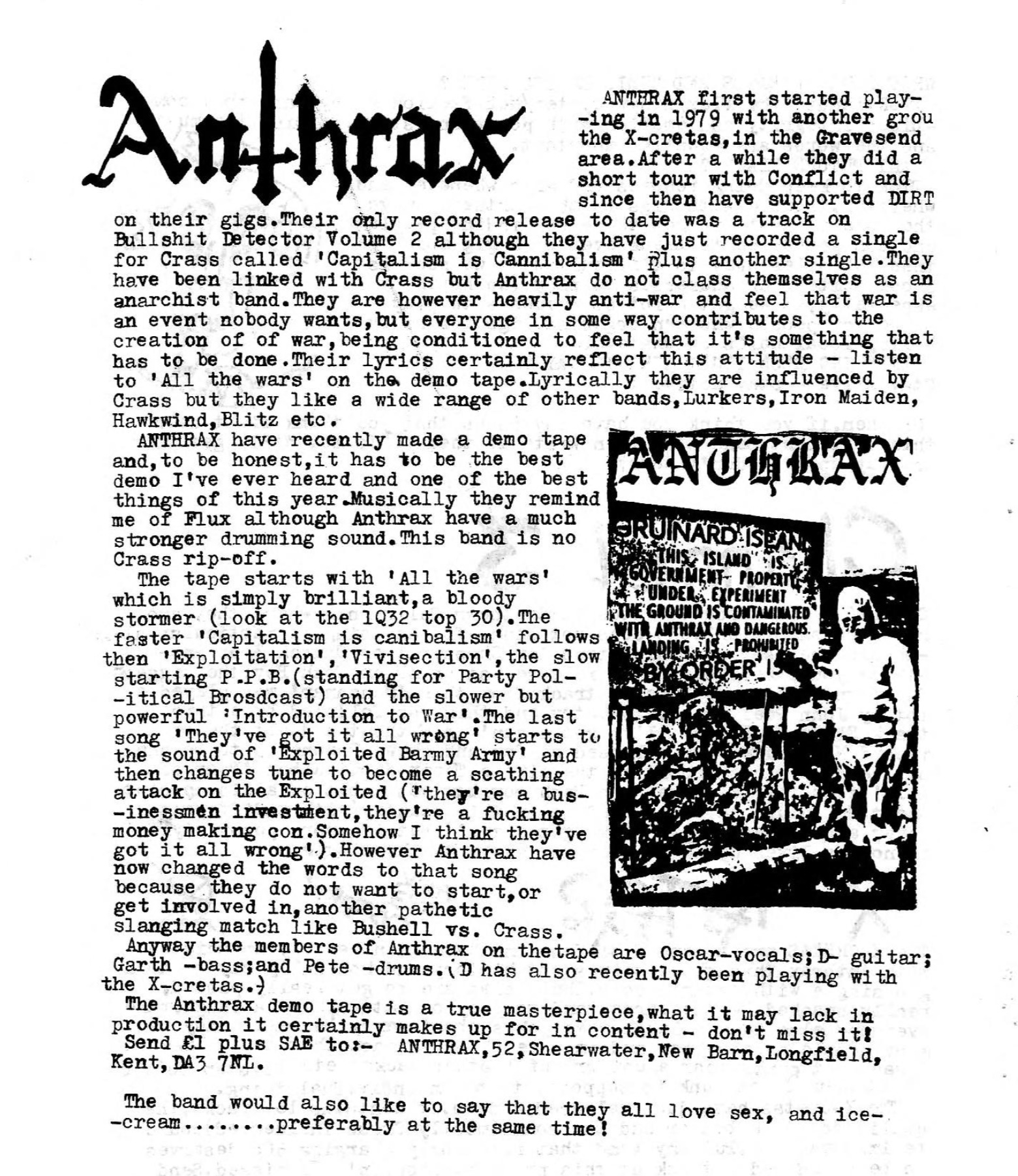
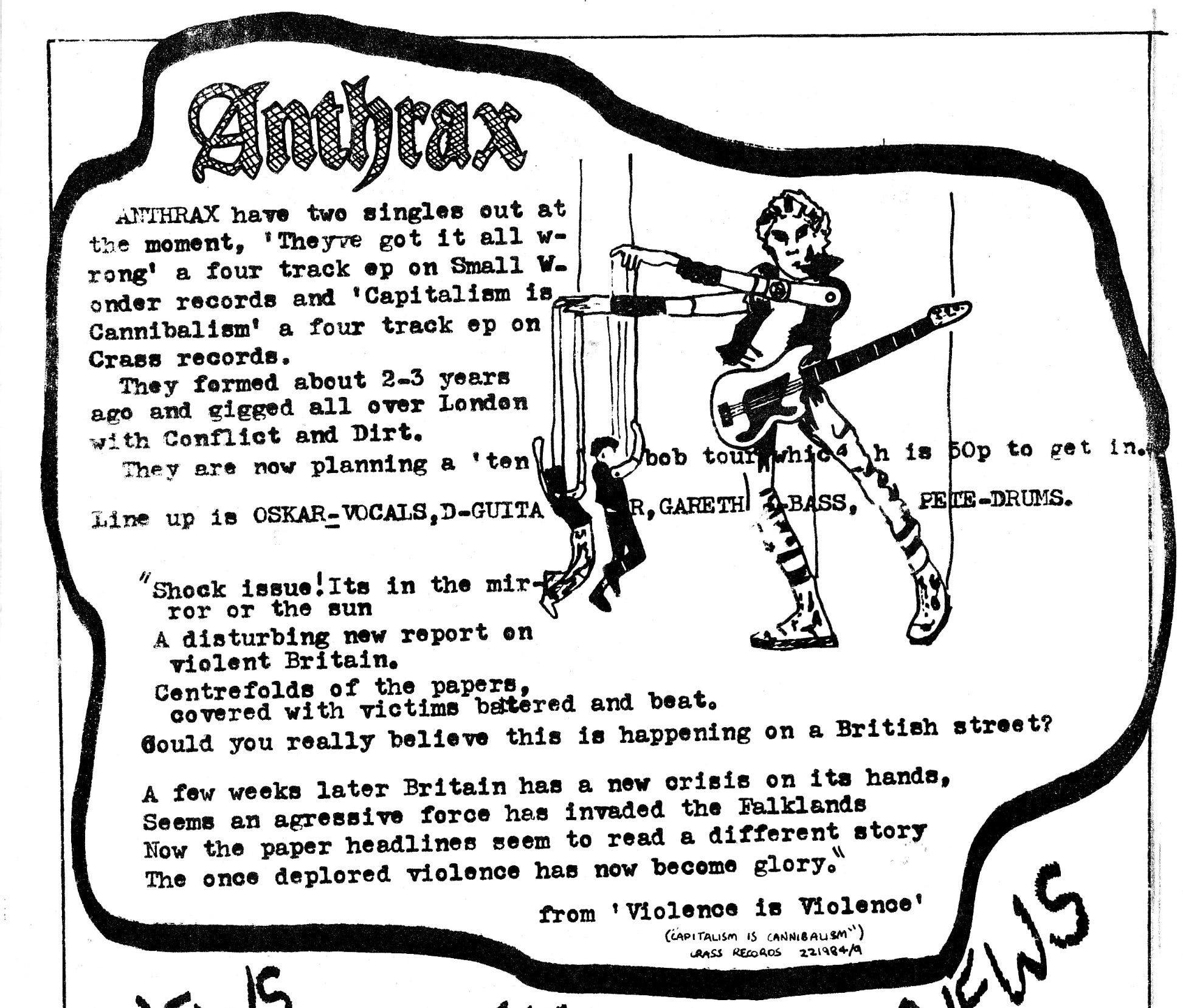
Anthrax were an anarcho band out of Gravesend. Vocalist, Gary ‘Osker’ Budd, did a fanzine called Enigma prior to playing in the band, which helped Anthrax get a lot of helpful contacts for once the band started rolling. One of those was Fack fanzine, who introduced them to Conflict, a band they played many of their first gigs with. Anthrax recorded seven songs at Oakwood Studios in Herne Bay in 1981. One of those songs “All The Wars,” ended up on the Crass Records compilation Bullshit Detector 2 in ‘82.
That gave them enough notoriety for Small Wonder Records to put out their first EP The’ve Got It All Wrong in ‘83, that peaked at #9 on the indie charts. Capitalism Is Cannibalism was recorded at Southern Studios with Penny Rimbaud (Crass) and John Loder. Apparently those two made a bunch of changes in post production that Osker was unhappy with, including removing their bass player’s tracks (!!).
“After the Bullshit Detector 2 album, Eve Libertine [from Crass] rang us up and asked if we wanted to do a single. It was weird, ‘cos we recorded for three days with Penny and John Loder [at Southern Studios], and when they mixed it, they took our bassist Gareth off the recording! And added all these little bits… and it ended up sounding nothing like the original songs. Basically we ended up sounding like Crass! Personally I prefer the first demo we did, but we were young, and it was good; we enjoyed it, no real regrets or anything.” (Glasper, 2006, p. 185).
The A-side of this record is good, but B-side rules. “Prime To Pension” starts trippy, then hits into a herky jerky midtempo banger. “All Things Are Bright and Beautiful” is midtempo on the toms with fast anarcho style singing on top of it and has stellar bass work peppered throughout. It’s over in 90 seconds. When this style embraces brevity, it’s at its best.
The final track they recorded before disbanding was “It’ll Be Alright On The Night”, that came out on the Mortarhate compilation, Who? What? Why? When? Where? in 1984.
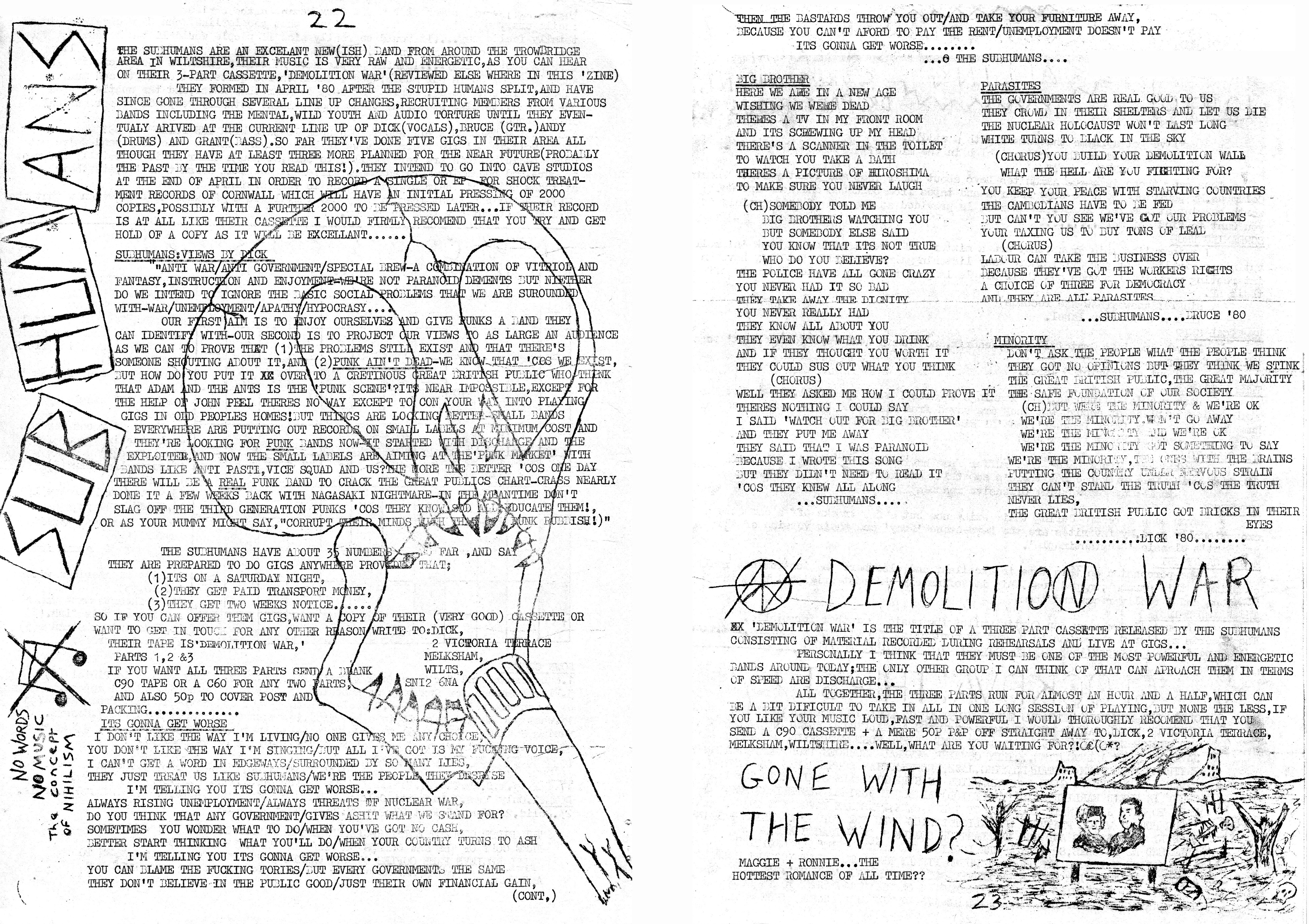
Subhumans are one of the most legendary punk bands of all time and they are still killing it live in 2026. The band was previously called the Stupid Humans but changed their name to Subhumans when Dick Lucas joined on vocals, after his band The Mental disbanded. They started gigging in the fall of 1980, eventually getting the attention of Flux of Pink Indians, who released their first 7”, Demolition War, on their label Spiderleg Records in ‘81. Their sound is already fully flushed out—a mix of hardcore punk and darker midtempo tunes, all with poignant, well written lyrics and hooks. Any of their 7”s from this era could’ve made the tournament, so why not just go with the first?
This 7” contains six tunes and all are great except the last track “Human Error” which kind of drags until the final 30 seconds. The first track, “Parasites,” is one of the the most classic Subhumans songs (“you build your demolition war / what the hell are you fighting for?”). That bass line on “Society” will live in the deep crevices of your brain (“our society, what a drag”), and good luck forgetting the chorus on “Who’s Gonna Fight In The Third World War?” (“there ain’t no patriots here no more, who’s gonna fight in the third world war?”).


ANTI-NOWHERE LEAGUE STREETS OF LONDON (1981) vs. SPECIAL DUTIES POLICE STATE (1982)
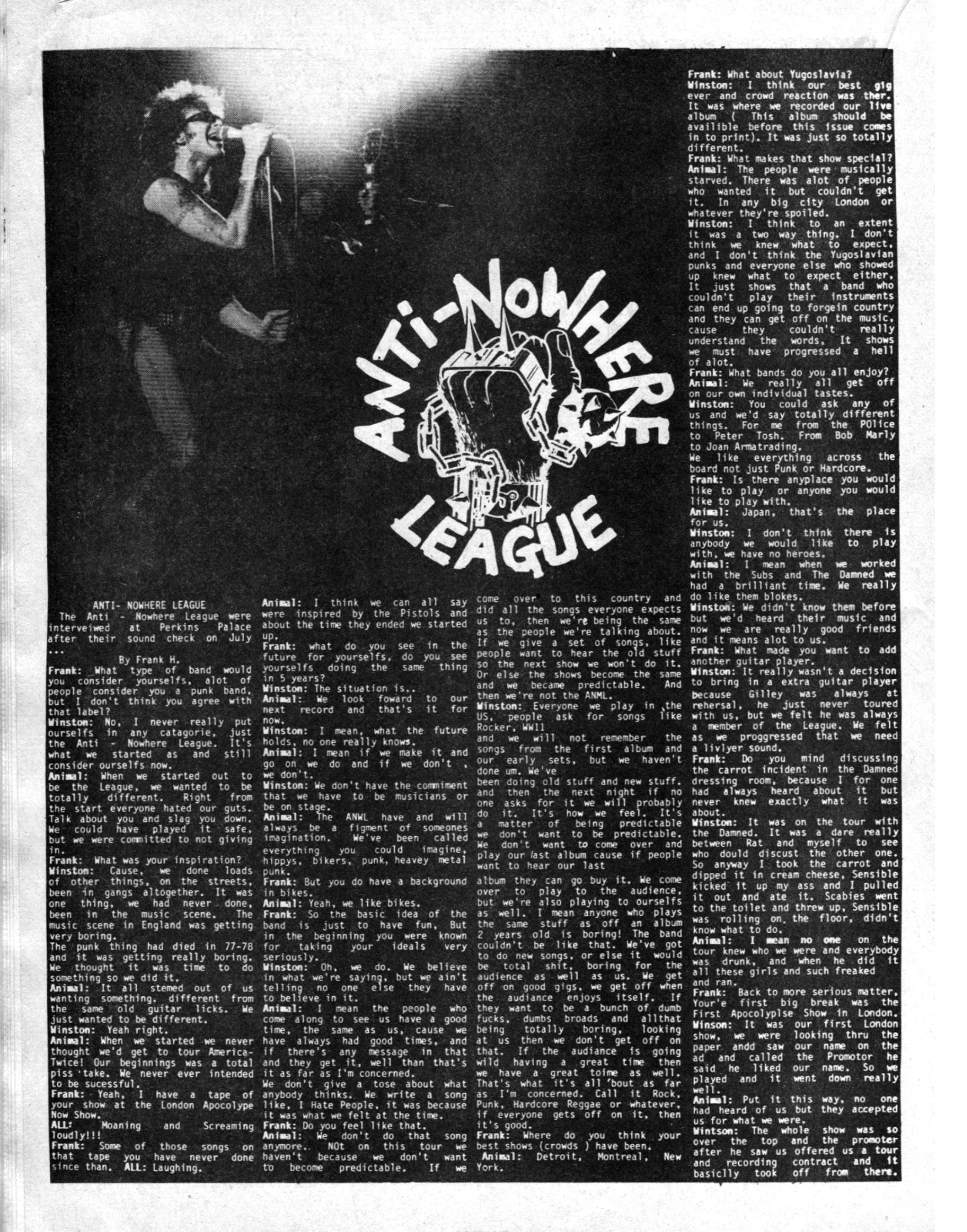
Anti-Nowhere League was formed in Tunbridge Wells by two bikers, vocalist Nick “Animal” Culmer and guitarist Chris “Magoo” Exall.
“It was a strange scene in Tunbridge; you’d get all sorts of yobbos – skinheads, bikers, punks – all drinking in the same pubs and all being friendly, and outsiders who came into town could never suss it out!
“It’s a weird place to live really; it’s not a city, it’s more like an oversized country village… very cliquey. It can be a bit violent, but there didn’t seem to be any major factions dividing people up back then, and it was just a very natural thing for the band to have bikers and a skinhead in it.” (Glasper, 2014, p. 249).
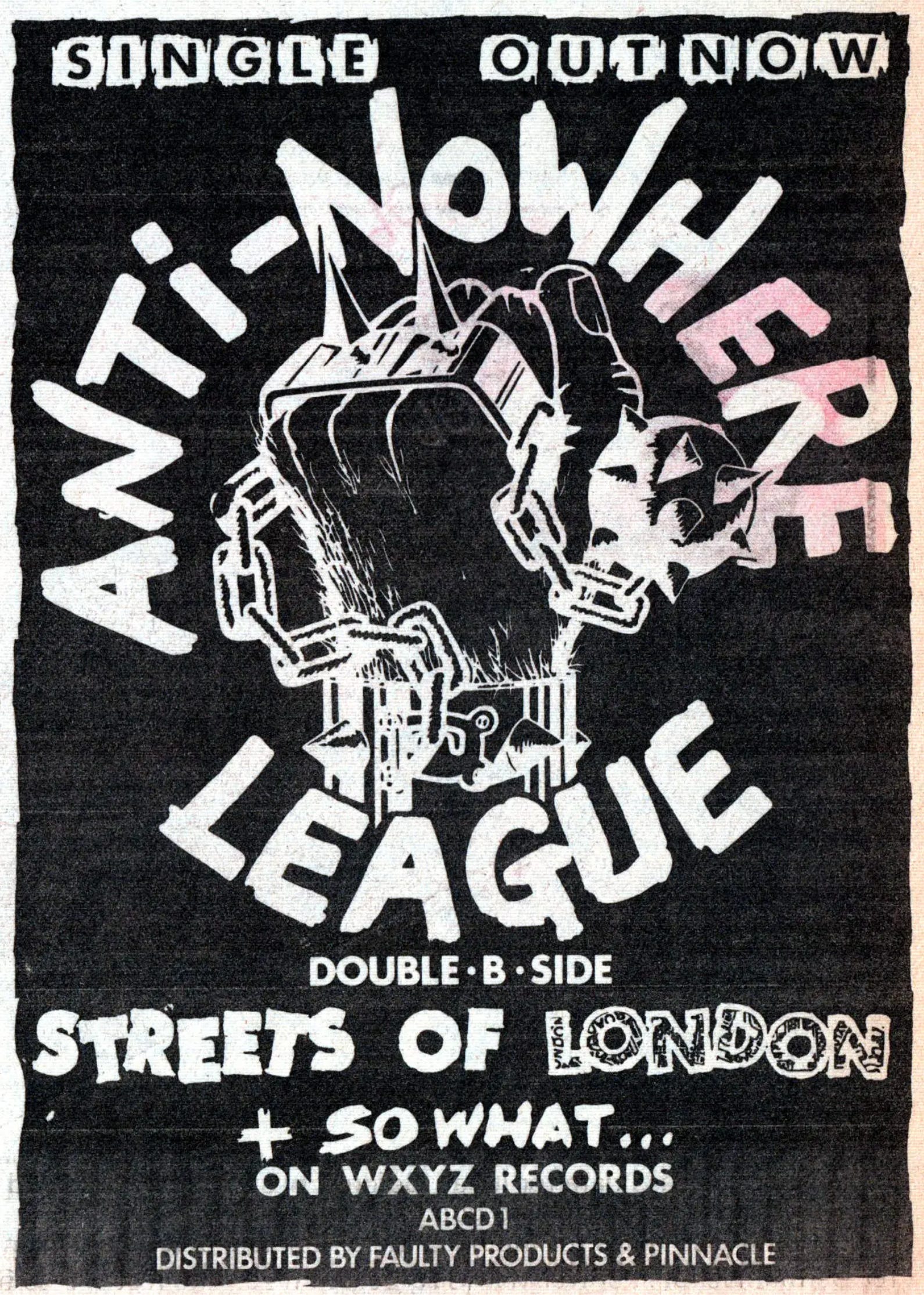
Anti-Nowhere League got the attention of promoter John Curd, who began managing them and signed them to his label WXYZ. Their first single Streets Of London hit #1 on the indie charts in 1981. The title track is a punked out cover of the Ralph Mctell’s folk song. The B-side is their most famous song, “So What?,” a track that Metallica covered on the B-side of their Unforgiven single in 1991. Both songs rule in totally different ways. Animal says of “So What?”…
“It was just a simple song, about those big-headed fuckers you overhear in the pub, saying ‘I’ve done this, I’ve done that… yeah, yeah, yeah, but anyway, I’ve been here, I’ve been there!’ To which my reply has always been, ‘So fucking what?’ The song was just about the fucking stupidity of those people and their conversations, but that’s the magic of songs; they can be about the simplest of things. They just pop into your head on the spur of the moment.” (Glasper, 2014, p. 250).
Their next two singles, the I Hate People 7” and their 1st LP, We Are…The League, both hit #1 on the indie charts, with the LP hitting #24 on the nationals.
An early version of the Colchester punk band Special Duties started in 1977 when singer Steve “Arrogant” Green was just 15, inspired by the Ramones and The Sex Pistols. They started playing gigs in 1979, with their first show being on the loading dock of a department store. Their first 7” was released in 1981 on Charnel House Records.
“We started the band as a result of ’77 punk, but before we knew what had happened, with all the lineup changes and the demos and the Charnel House thing, it was 1980, and we were starting to get left behind,” explains Steve. “The second wave of punk had started, and all these bands like The Partisans and Blitz were signed to No Future and releasing records… Anti Pasti were on Rondelet… so we sent a demo and a copy of the Charnel House single to both of those labels. No Future said they liked it but they already had too many bands on the label, but Rondelet wrote back and said they’d be interested in re-releasing the ‘Violent Society’ single…” (Glasper, 2014, p. 182).
The first single on Rondelet came out in ‘82, a ridiculously busy year for the band. It was a re-recording of the two songs from their debut 7” along with an extra track. They recorded their 3rd 7”, Police State, at Cargo Studios in Rochdale, and were aided by having Mackie from Blitz and Helen from the Violators in the studio who helped them produce the record. Personally, I think it’s their most solid record—four meaty, mean sounding hardcore songs with zero fluff. They did an LP shortly after and ended ‘82 with their most notorious record, the 7” Bullshit Crass.
“Everything I said about them at the time, I meant, and I still feel as strongly about it now as I did back then. It wasn’t a publicity stunt or anything… if it was, it wasn’t a very good one, to tell everybody that we hated their favourite band! We alienated almost everybody! It sold quite well, but that may have been because it looked a bit like a Crass record, and their fans were so stupid they thought it was one!” (Glasper, 2014, p. 184).
Distributors Rough Trade and Small Wonder both refused to stock the record and shortly after, their label Rondelet imploded. They put out a final single in ‘83 before imploding themselves.


ANTI-SYSTEM DEFENCE OF THE REALM vs. RUDIMENTARY PENI S/T (1981)
Anti-System was an anarcho band out of Bradford whose demo tape got the attention of Pax Records. Their first songs hit wax on the Pax comp Punk’s Dead? Nah, Mate, The Smell Is Jus Summink In Yer Underpants (uhhhh…wat?) in ‘83. They decided to record their first 7”, In Defence Of The Realm, at Cargo Studios in Rochdale because Discharge had used it (Why was mixed there.) It’s a crushing debut that mixes anarcho and hardcore.

The record kicks off with “Animal Welfare,” a 90-second, aggressive UK82 style tune similar to Chaos UK or GBH. It’s followed by “No Longer To Choose,” a brutally long over-four-minute song that sandwiches a ripping middle section with two big dragger parts that, in their defense (of the realm har har), have pretty cool, trippy guitars. “Service” is a poem, and then they hit the best one-two on the record, “1000 Rifles,” a total ripper, into “Government Lies,” a crucial midtempo banger (“government lies, we die”).
Their 1985 LP that follows, No Laughing Matter, is my favorite record of theirs.
Rudimentary Peni of Abbots Langley, Hertfordshire need no introduction. They are quite frankly one of the most legendary punk ever. The band formed after singer/guitarist Nick Blinko’s previous weirdo synth band, The Magits, broke up. Their debut 7” was self released in 1981 on Blinko’s record label, Outer Himalayan, and is a bonafide classic. It’s 12 songs in 12 minutes of ripping, uptempo midtempo hardcore punk. There’s as much aggro, late ‘70s/early ‘80s So Cal punk in their sound as there is anything anarcho. You can’t hear the Black Flag and Dead Kennedys? Hit the Q-tips then circle back.
Blinko’s vocals are out of this world, and they’re at their wildest here when he has the smallest pallets to fit his poems onto. The first five songs are all 10/10 tracks and none break a minute. It isn’t until “The Garner” that they slow it down and plod a bit. On the flip, you get hit with one of their most classic songs, “Teenage Time Killer.” It starts with haunting one string bendies before adding the bass and kicking into that raging uptempo midtempo pace. “Dead Living” might be my favorite song on the record and it’s only 34 seconds. Fuck.
Their next record, Farce, came out on Crass Records in ‘82 and then their first LP, Death Church, came out in ‘83 on Corpus Christi, a Crass Records sub-label.
ATTAK TODAY’S GENERATION (1982) vs. THE PARTISANS 17 YEARS OF HELL (1982)
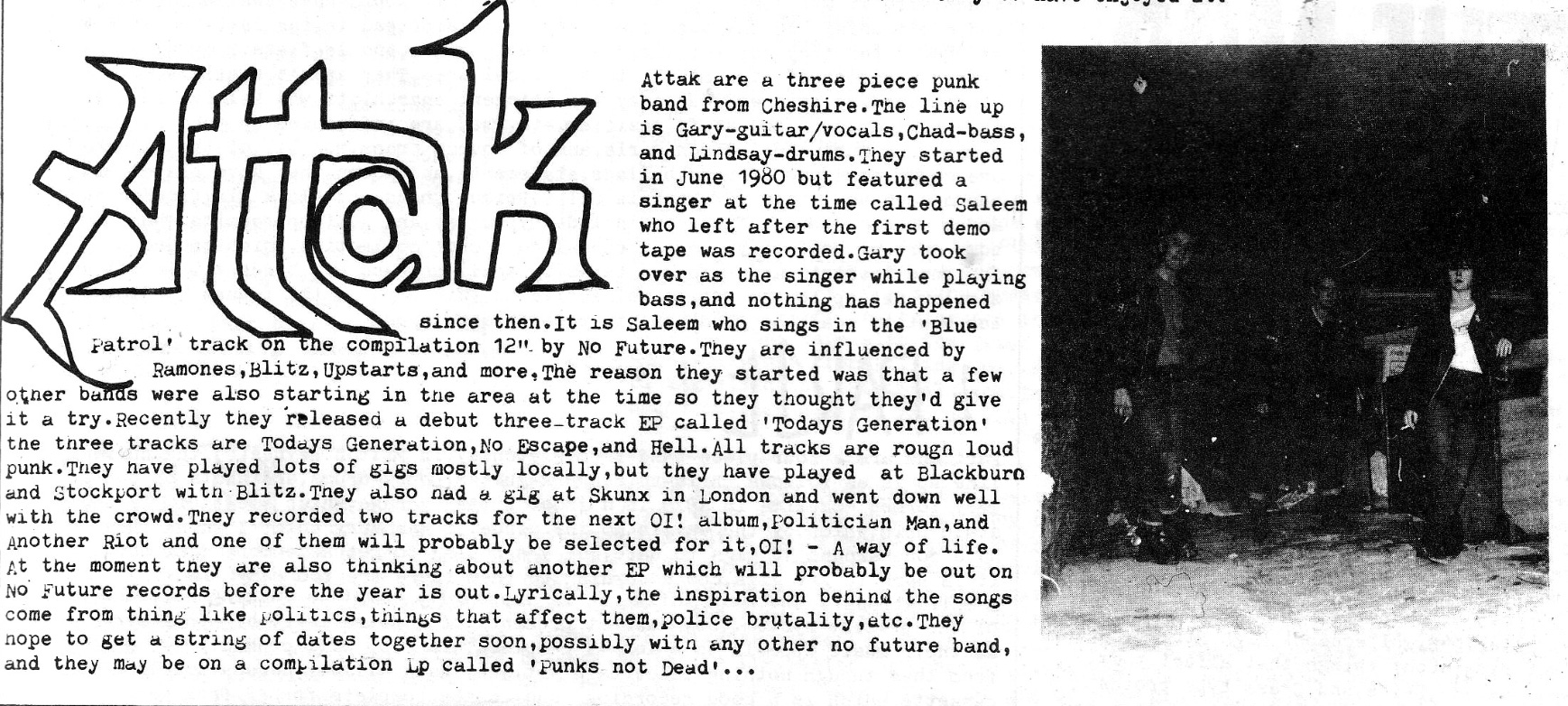
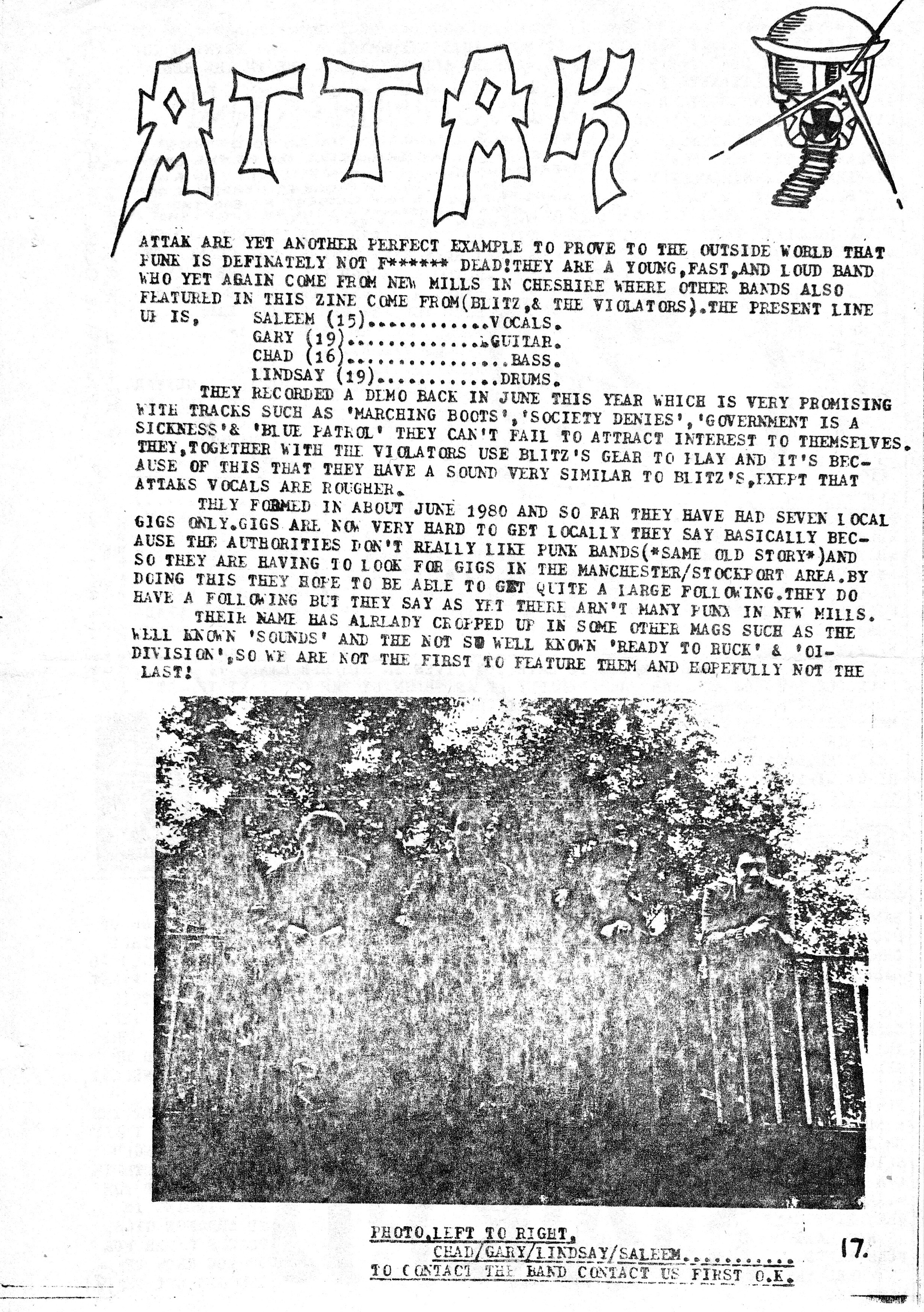
Attak sound a lot like Blitz. That’s not a diss, it’s intentional and they’d probably take it as a compliment. They were from the same town and even took their name from the first Blitz 7”, All Out Attack. Attak sent their demo to Blitz’ label No Future, who liked it enough to put their song “Blue Patrol” on the A Country Fit For Heroes compilation that came out in early 1982. Their debut 7”, Today’s Generation, followed on No Future in the same year. It’s a noisy 7” that sounds like Blitz if they were from Bristol. The title track is the best song, sounding like a more raw Blitz without the big vocal hooks. “Hell” drags a bit but the three-song 7” caps with “No Escape,” an aggressive UK82 style jammer.
They put out a 2nd 7” and an LP before splitting in 1984. Guitarist Gary Basnett sang on the 1989 Blitz LP, The Killing Dream.
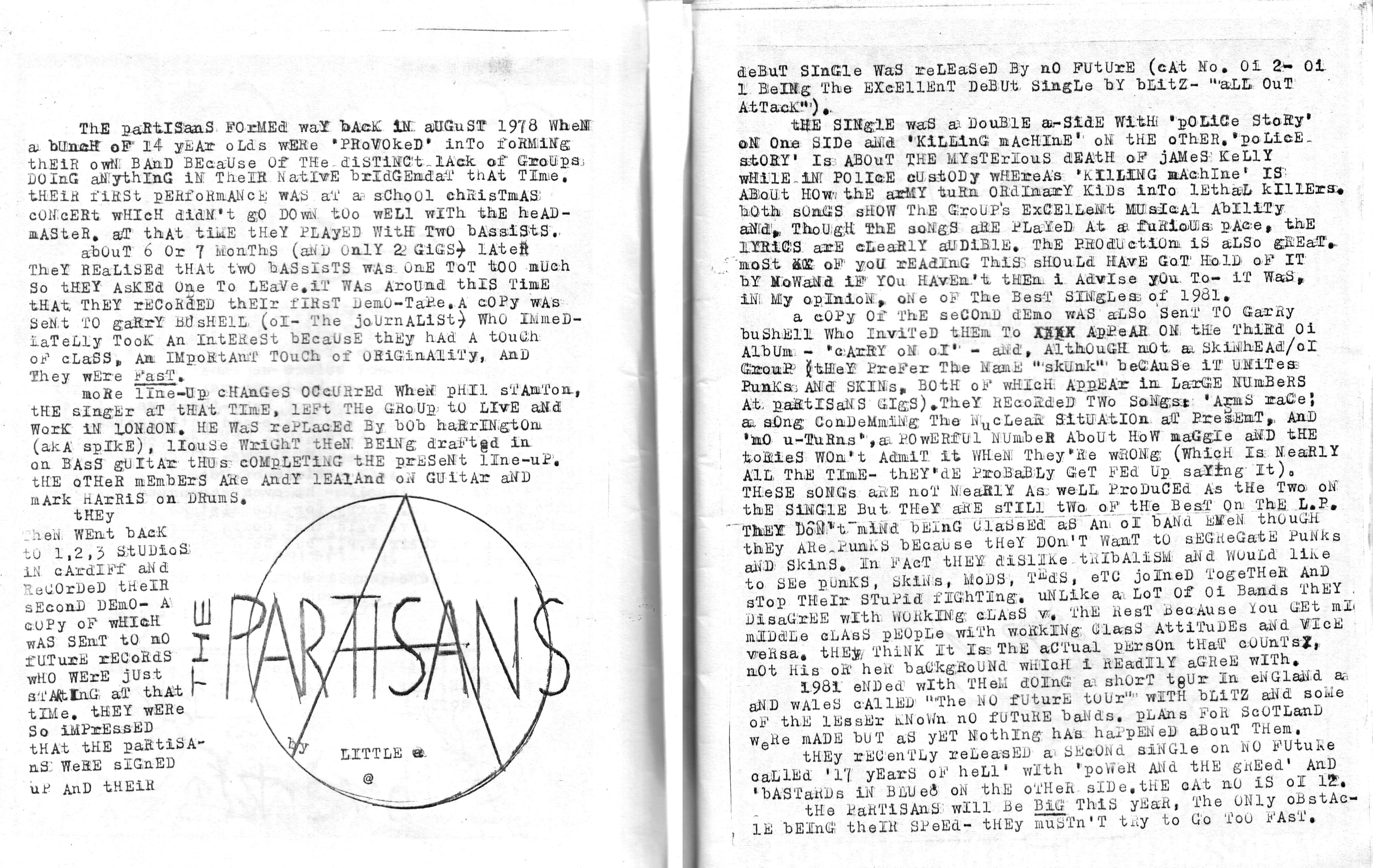
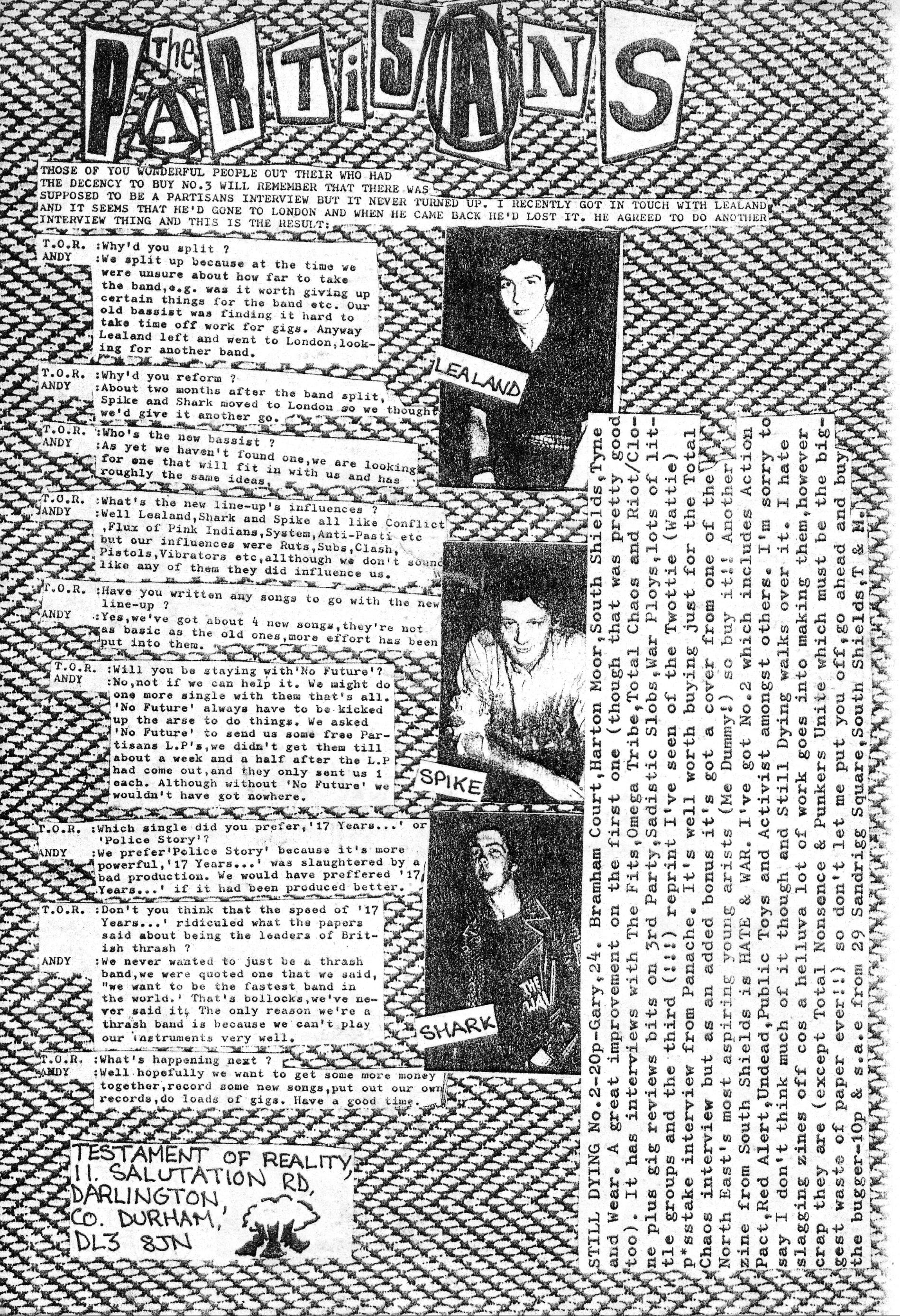
The Partisans put out one of my favorite LPs of the era, their self titled 1983 LP on No Future. For this tournament, we had to decide between the first two Partisans 7”s and it wasn’t easy since both are great. We ended up taking the 2nd one from 1982, 17 Years Of Hell. The title track appeared on the LP from ‘83 and may be their best song, equal parts gritty and anthemic. The other two are no slouches in their own right and show the other side of The Partisans—that they can be a fucking great hardcore band.
The boys from Wales started the band in 1978 when they were still in their teens. They got signed to No Future off their demo and their first 7” came out in ‘81. It caught the ear of Garry Bushell who courted them to contribute two songs to the 3rd album in his Oi! series, Carry On Oi! the same year. In ‘82, they put out the 17 Years Of Hell 7” and then frustrated by violence at gigs, they broke up in the summer. By the end of the year they had reunited to record an LP, simply to fill a contract obligation.
“As usual we didn’t rehearse before we went into the studio,” admits Andy (Lealand). “I think we just recorded it as if it was a demo, completely live with a few overdubs. It was all done and mixed within eight hours or something; we really had no idea what we were doing, and I don’t think we cared that much. We just sent it off to No Future and they released it shortly afterwards.” (Glasper, 2014, p. 267).
Some bands just have it. It’s one of the best LPs of the era from anywhere in the world. Later in ‘83 they released a more mature sounding EP on Cloak & Dagger Records called Blind Ambition, and the following year they released an LP on the same label called The Time Was Right. That record was half studio, half live recording and confusingly kicked off with a song off their previous LP. The new songs are good but the fire of the first two EPs, the comp tracks, and the previous LP is gone. They broke up later that year.
BLITZ NEVER SURRENDER / RAZORS IN THE NIGHT vs. RED ALERT IN BRITAIN (1982)
Hailing from New Mills, Derbyshire, Blitz are one of the premier punk bands of the era, and thus all time. They started jamming in 1980 and named the band after “Blitzkrieg Bop,” by the Ramones—the band that guitarist Nidge Miller said got him into punk. Their first show was opening for Discharge in Bradford in May of that year. They recorded a demo that ended up being their 1981 debut 7”, All Out Attack, the first release on the legendary No Future Records. It sold over 25,000 copies.
They had two songs on the Carry On Oi! compilation later in the year but Blitz weren’t one for subgenre labeling.
“We never really liked the ‘Oi’ label, anyway,” admits Nidge. “We just thought it was a bit silly really. Plus with the explanation mark after it, it looked like we were on an album called ‘Carry On Oil’! We always thought of ourselves as a punk band, end of story. We never set out to ‘break down barriers’ or anything either, because as far as we were concerned, there weren’t any barriers in the first place… certainly not in our crowd anyway.” (Glasper, 2014, p. 64).
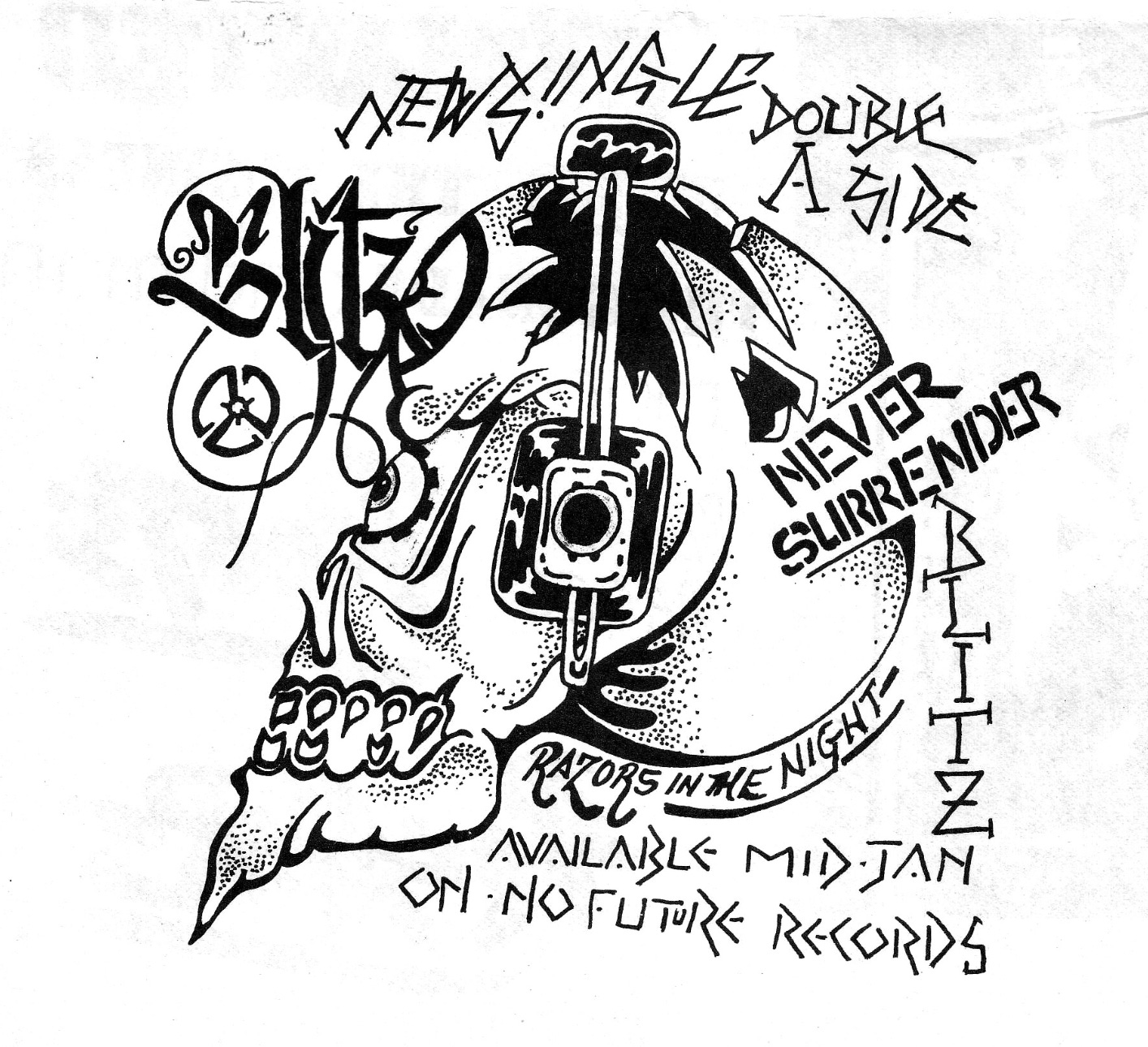
The single that is included in this tournament followed in 1982, Never Surrender / Razors In The Night. “Never Surrender” is their most hardcore song, full throttled and over the plate with the memorable “never surrender” hook. The B-side, “Razors In The Night,” may be their best song. Equal parts anthemic and gritty, it showcases both sides of what people love about the classic Blitz sound. In a way, it’s like the early Misfits material where the raw recording somehow elevates the soaring vocal hooks.
The Warriors 7” and their first LP, Voice of A Generation, followed, marking a hell of a year in 1982 for the band. I know people ride for the whole Blitz catalog but this is where the classic material ends for me. Yes, the song “New Age” that got released in ‘83 is one of the best songs of all time but the production is totally different. The song is just so good that it succeeds in spite of the massive change. Miss me with anything after, including the B-side.
Nidge was tragically struck by a car and killed outside of Austin, TX in 2008 while on a three week long American tour.
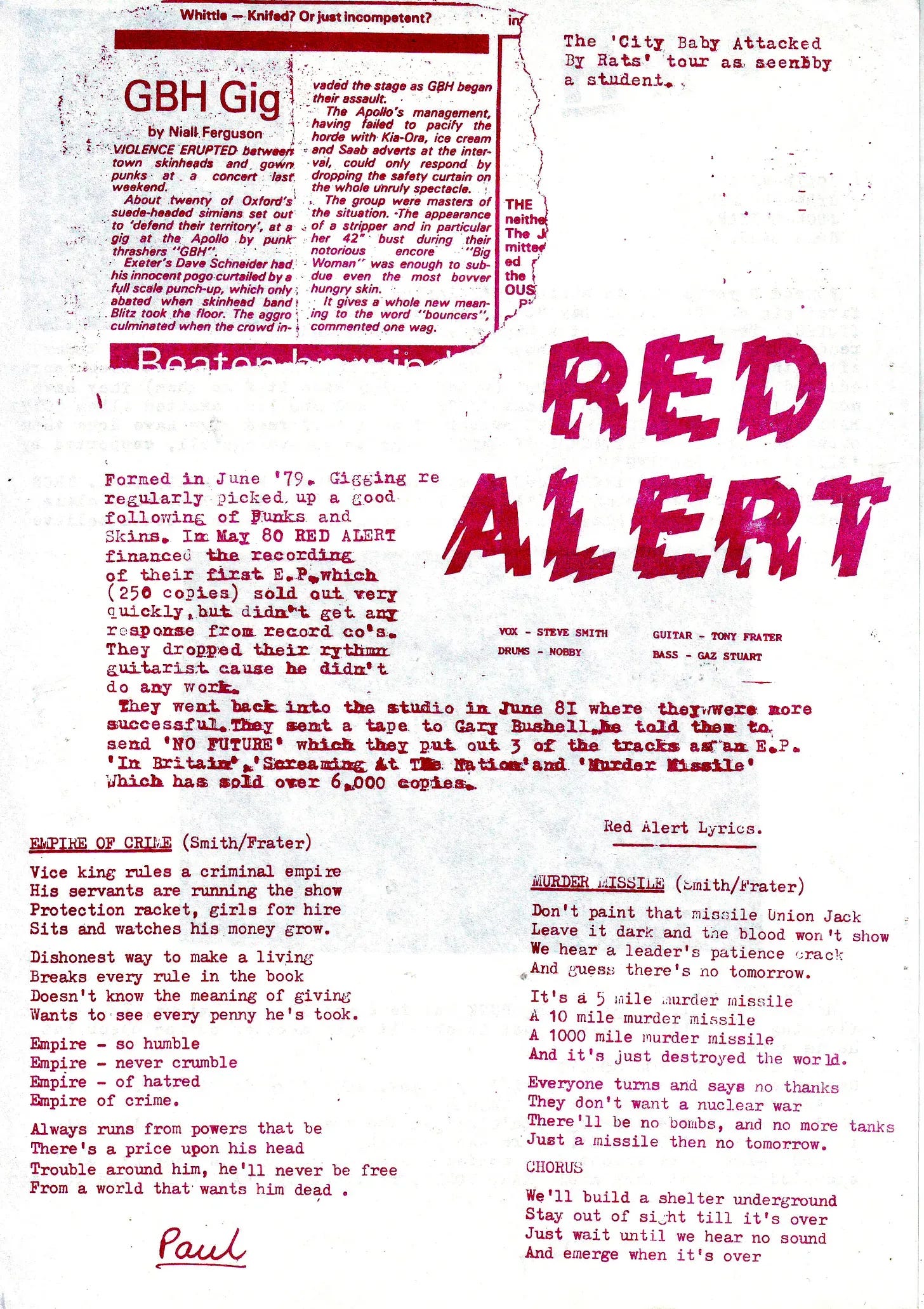
Sunderland’s Red Alert started in 1979 when they were all still in school. Their first 7” was self released in 1980. They recorded a new demo and sent it to Garry Bushell who gave them a spot on Carry On Oi! and told them to send their tunes to No Future.
“As soon as we got home, that’s what we did. And literally within two days we were signed to them. It was comical; when the call came that they wanted to sign us, we were all out in the street screaming and shouting. We thought we’d done it, what a feeling. All the hard work had paid off, and, no matter what is said or written about him, we’ll always have Garry Bushell to thank for pointing us in the right direction.” (Glasper, 2014, p. 106).
In Britain was released on No Future in 1982 and the title track is one of the more memorable punk songs of the year. The band put out a few more singles and an LP before breaking up in 1984.




THE BLOOD MEGALOMANIA (1983) VS. PETER AND THE TEST TUBE BABIES BANNED FROM THE PUBS (1982)
The Blood first appeared on the scene in 1982 as the final track on the fourth installment of Garry Bushell’s Oi! series, Oi! Oi! That’s Yer Lot!, under the name Coming Blood. They tweaked their name and released Megalomania on No Future Records in 1983. It’s a fabulous record that mixes speed and fury with over the top melody. To me, it sounds like a mash up between The Damned and maybe a band like B.G.K. or Upright Citizens. On the pod, Kev compared the speed and unhinged nature of the drumming to Jerry’s Kids, which I think is a great comparison.
All three songs on the 7” are spectacular. The title track opens the record and starts with a piano intro. When the song kicks in, it’s based around a guitar lick that mirrors the opening piano part and works as a de facto chorus. Coming out of the second chorus, the song launches into a fabulous solo before landing back into that recurring lick. “Parasite In Paradise” has an insane contrast. The drummer is raging on this one, playing most of the song on the cymbals in a way that almost sounds like raw punk. But then you have this spacey keyboard solo that is so fucking random that it actually works. “Calling The Shots” is super melodic and almost sounds like an aggressive Leatherface song (“calling the shots, ahhh ahhh”). That little guitar lick that surrounds the chorus…chef’s kiss.
They put out another 7” and an LP in 1983, ending their classic era. The 1985 12” more of a hard rock record and I haven’t listened to anything beyond that.
The first time Peter and the Test Tube Babies appeared on vinyl was with their song “Elvis Is Dead” on the Vaultage 78 - Two Sides Of Brighton compilation LP in 1978. It’s not the best debut song. Shit, it’s not even a good song but that wasn’t the point. Singer Peter Bywaters said they only wrote it to piss off the Teddy Boys. Regardless of my opinion on that track 48 years later, John Peel liked it enough at the time to give them a session which brought them greater exposure. That lead to two of their tracks appearing on Garry Bushell’s 1980 compilation LP, Oi! The Album. Then came No Future.
“Anyway, then Del saw this classified advert in Sounds,” says Peter. “It wasn’t even in a box or anything, asking for punk and skinhead bands, so we wrote off… and they sent us a contract. So we just signed it and sent it back, we didn’t take it to a lawyer or anything! Our manager (Nick McGerr) was tearing his hair out, saying, ‘You could have at least shown it to me!” (Glasper, 2014, p. 255).
Their first single on No Future was Banned From The Pubs. I’ve hated the title track since I first heard it on Oi! The Tin back in the late ‘90s. But again, regardless of my thoughts, it’s a classic track that folks seem to love. I gotta admit, the riff is pretty catchy and the verses are endearing at first, it’s just annoying by the time the “banned from the pubs” refrain goes into double digits. The other songs are kinda whatever. “Moped Lads” reminds us that these guys are no Johnny Moped, and “Peacehaven Wild Kids” could have been a great tribute to their hometown. It starts great with a nice little guitar lick over some (future) youth crew toms. The verse and chorus are nice and tuneful but then the song just kind of drags along for nearly four minutes and makes me want to never hear it again…basically just like the other two songs, or any of their other songs.


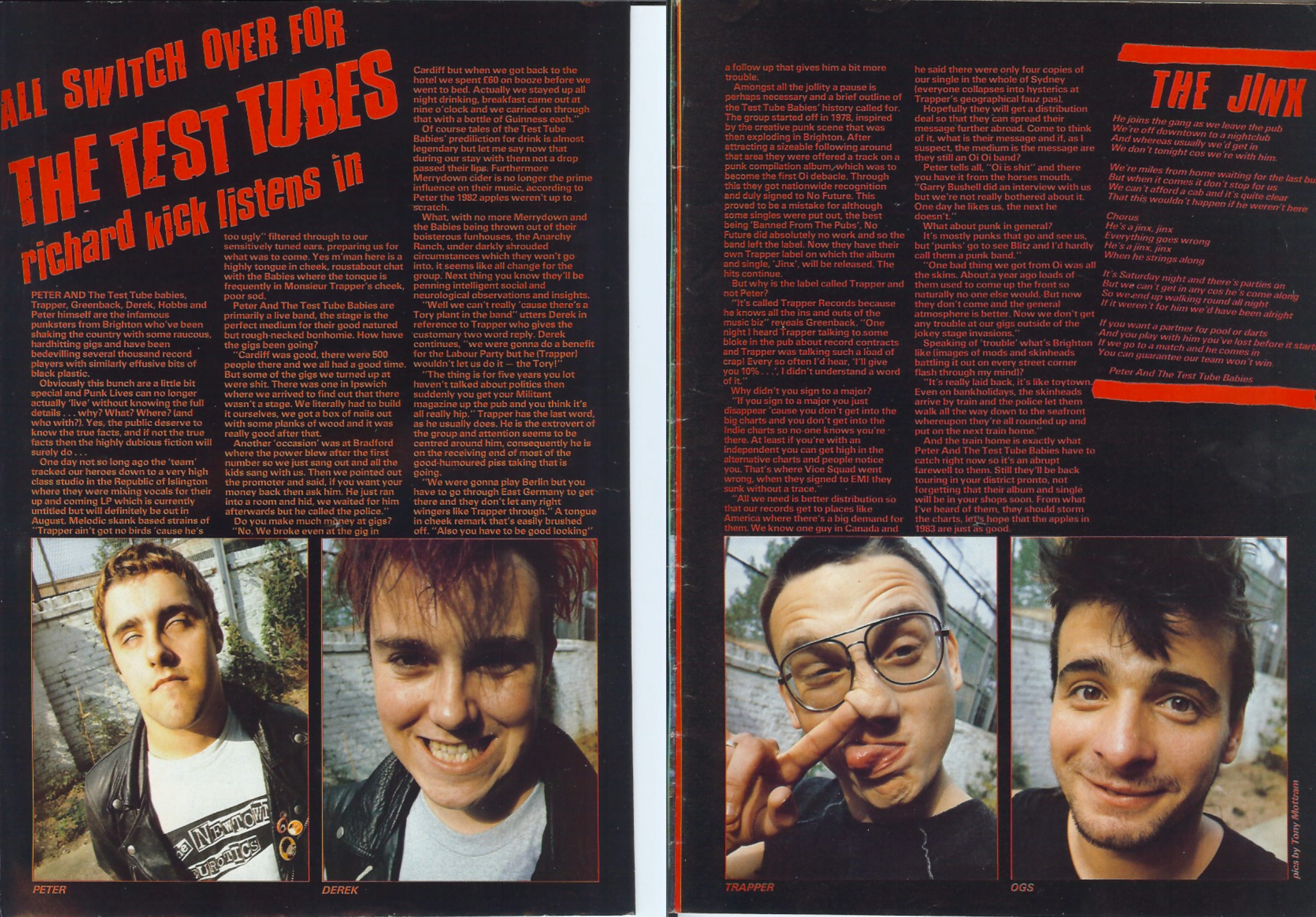
CHAOS UK BURNING BRITAIN 7” (1982) VS. THE OPPRESSED NEVER SAY DIE (1983)
“We thought, ‘If Vice Squad can do it, why can’t we?”
- Andy Farrier, OG guitarist of Chaos UK (Glasper, 2014, p. 22).
The classic tale of hardcore. If that band can do it, why the fuck can’t we?
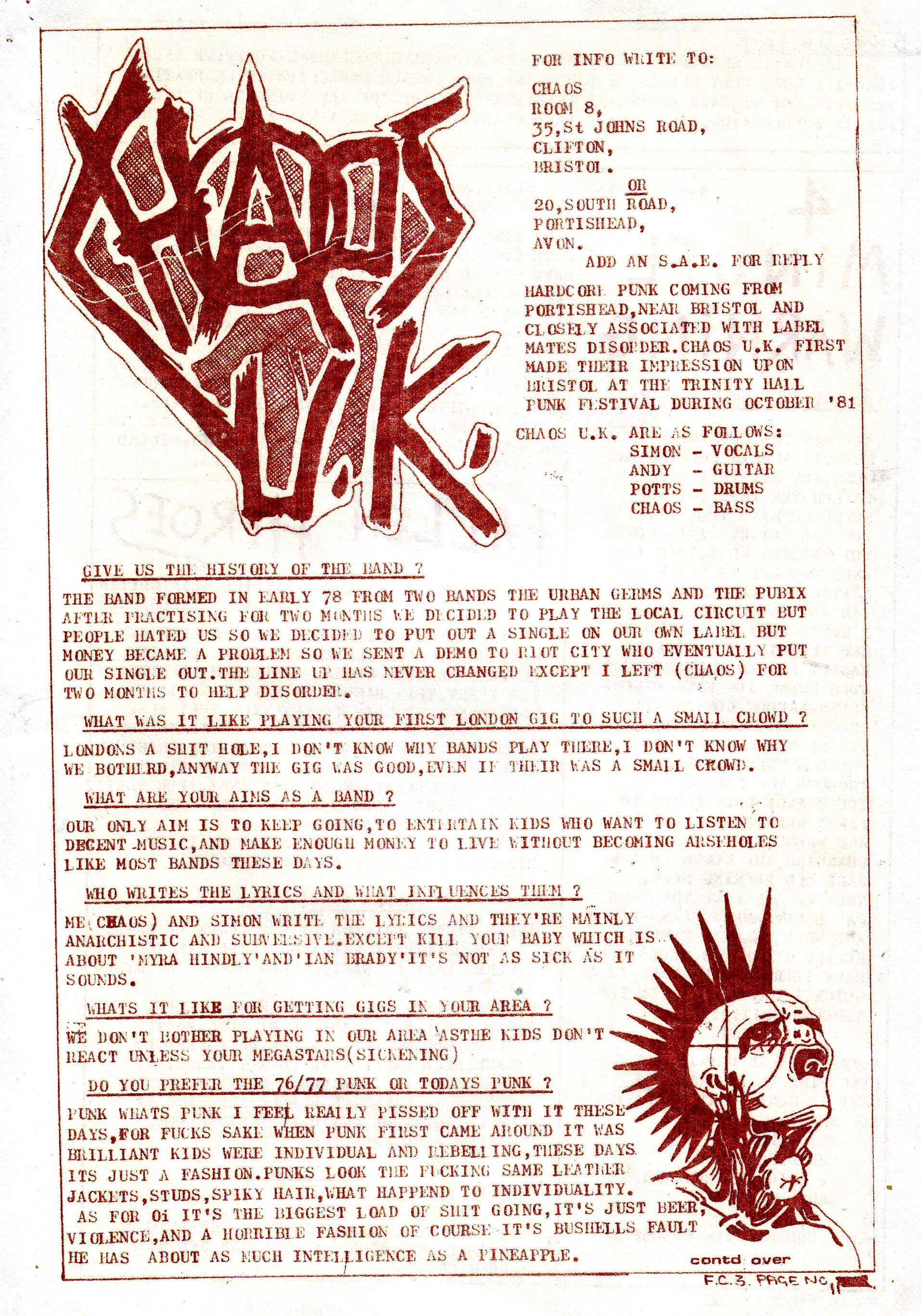
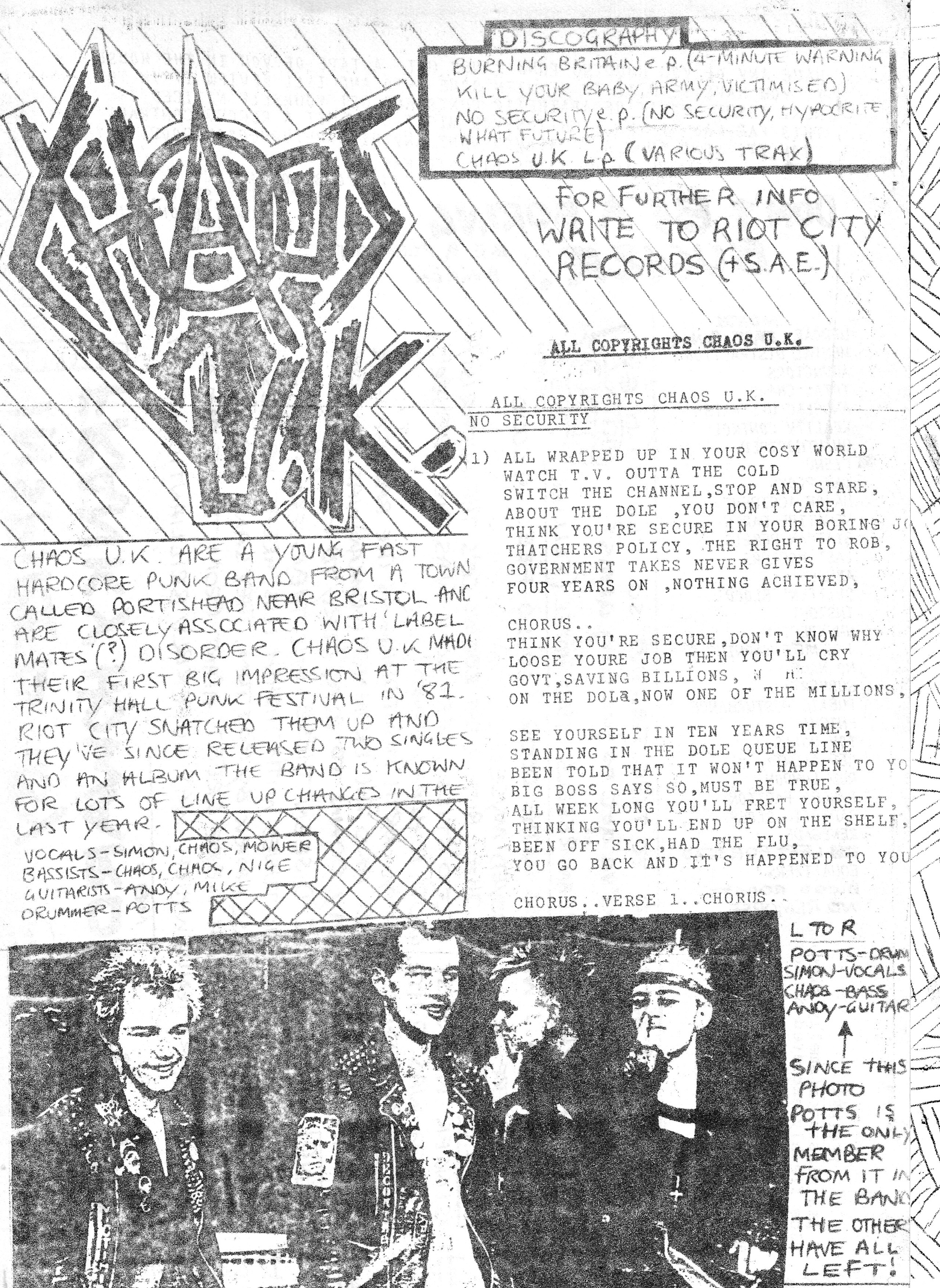
Before the Bristol punk scene was defined by the harsh tones of Chaos UK and Disorder, it was represented by bands like The Cortinas and Vice Squad. If they could put out records, why couldn’t Chaos UK? So the band hit the studio to make a demo. The four songs from that session ended up being the Burning Britain 7”, a total tone beast. The way the fuzzy guitar sits right behind the pummeling bass makes it one of the best sounding 7”s of the era. It was put out by Riot City, a label ran by Simon Edwards of Heartbeat Records along with two dudes from Vice Squad.
“Four Minute Warning” is a perfect UK82 song—anti-war, super in the pocket, big chorus, the bass driving the whole thing. “Kill Your Baby” follows and is a hell of a number too (“put your baby on the kitchen table”). The B-side shows their more plodding side with “Victimised” being the more memorable of the two (“I’ve been victimised, the police won’t leave me alone”).
A second 7”, Loud Political & Uncompromising, followed in the same year. It’s three more songs of the same style and you could make the argument that it’s even better. They somehow managed to put out multiple classics throughout the ‘80s despite many member changes, and famously toured Japan in November of 1985.
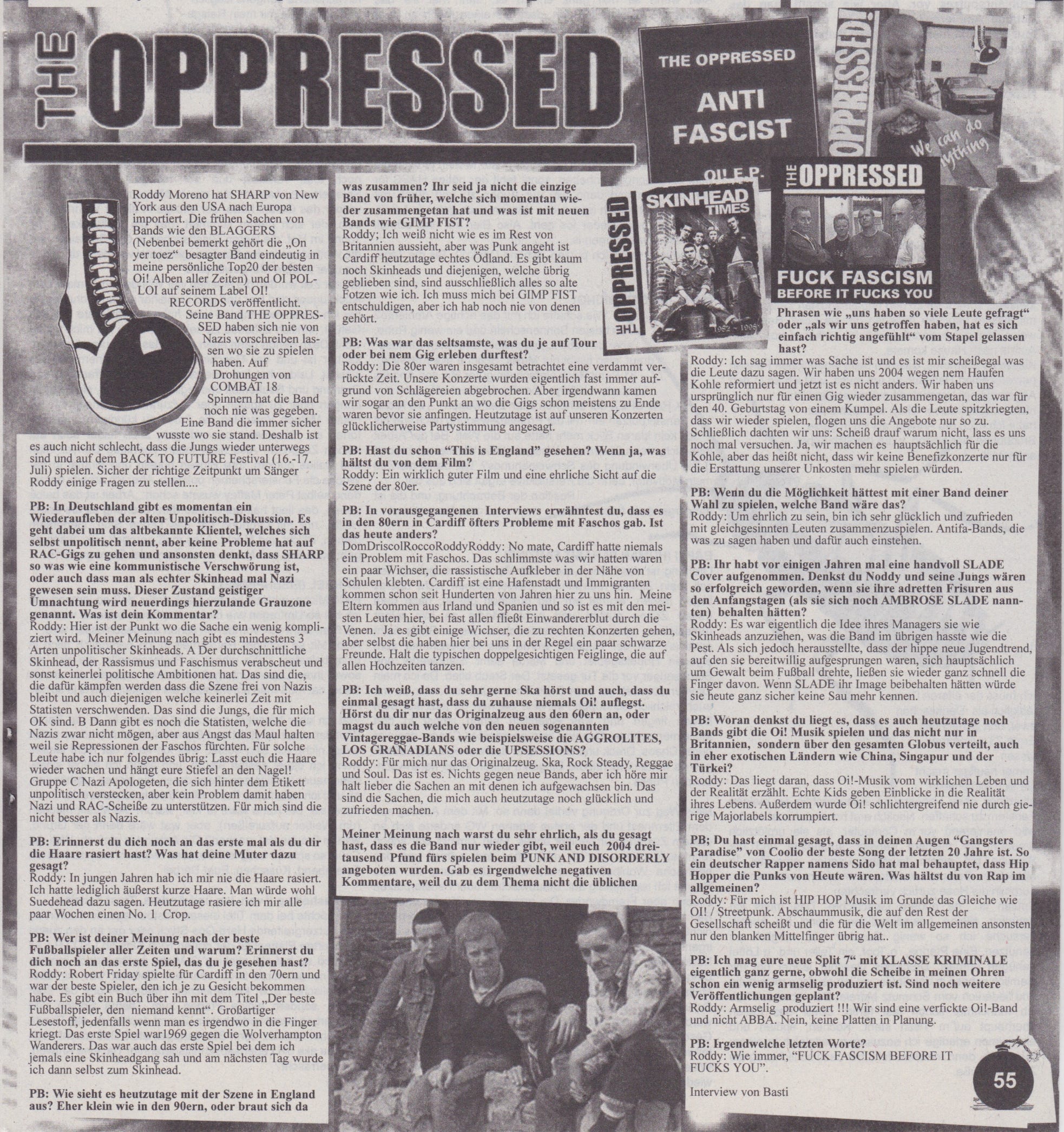
The Oppressed hailed from Cardiff, the capital of Wales, and first appeared on the Oi! Oi! That’s Yer Lot! compilation in 1982 with their track, “White Flag.” In ‘83, they followed with two 7”s, one of which is the Never Say Die E.P. that we included in the tournament. It’s three songs of 1983 boot music and features one of the most classic Oi! anthems of the era, “Ultra-Violence” (“violence, ultra-violence”). “Urban Soldiers” is a pretty catchy number too. When singer Roddy Moreno starts yelling “skinheads” after the chorus, it sounds like he’s literally yelling it in your face, drill sergeant style. They put out an LP the following year in ‘84, the final record of their classic era.

COCK SPARRER ENGLAND BELONGS TO ME (1982) VS. ONE WAY SYSTEM NO ENTRY (1982)
Cock Sparrer started as a pub rock band before punk existed. Their ‘70s material reflects the mashup of that style along with the emerging punk sound of ‘76/’77. They put out two singles and an LP before breaking up for the first time in ‘78.
A couple years later, Garry Bushell started putting some of their old songs on his first two Oi! compilations, Oi! The Album (1980) and Strength Thru Oi! (1981). This created enough buzz to motivate the boys to get the band back together and release their first new music in four years. The end product was the England Belongs To Me 7” and the A-side title track is one of the most classic songs of the era. You know it, you love it…you might be so burnt on it that you never need to hear it again. On the flipside, you have “Argy Bargy,” a song that is only good if you’re three sheets to the wind and singing with your friends, but classic nonetheless.
The following year Cock Sparrer would release their Shock Troops LP, one of the greatest records in the history of guitar music.
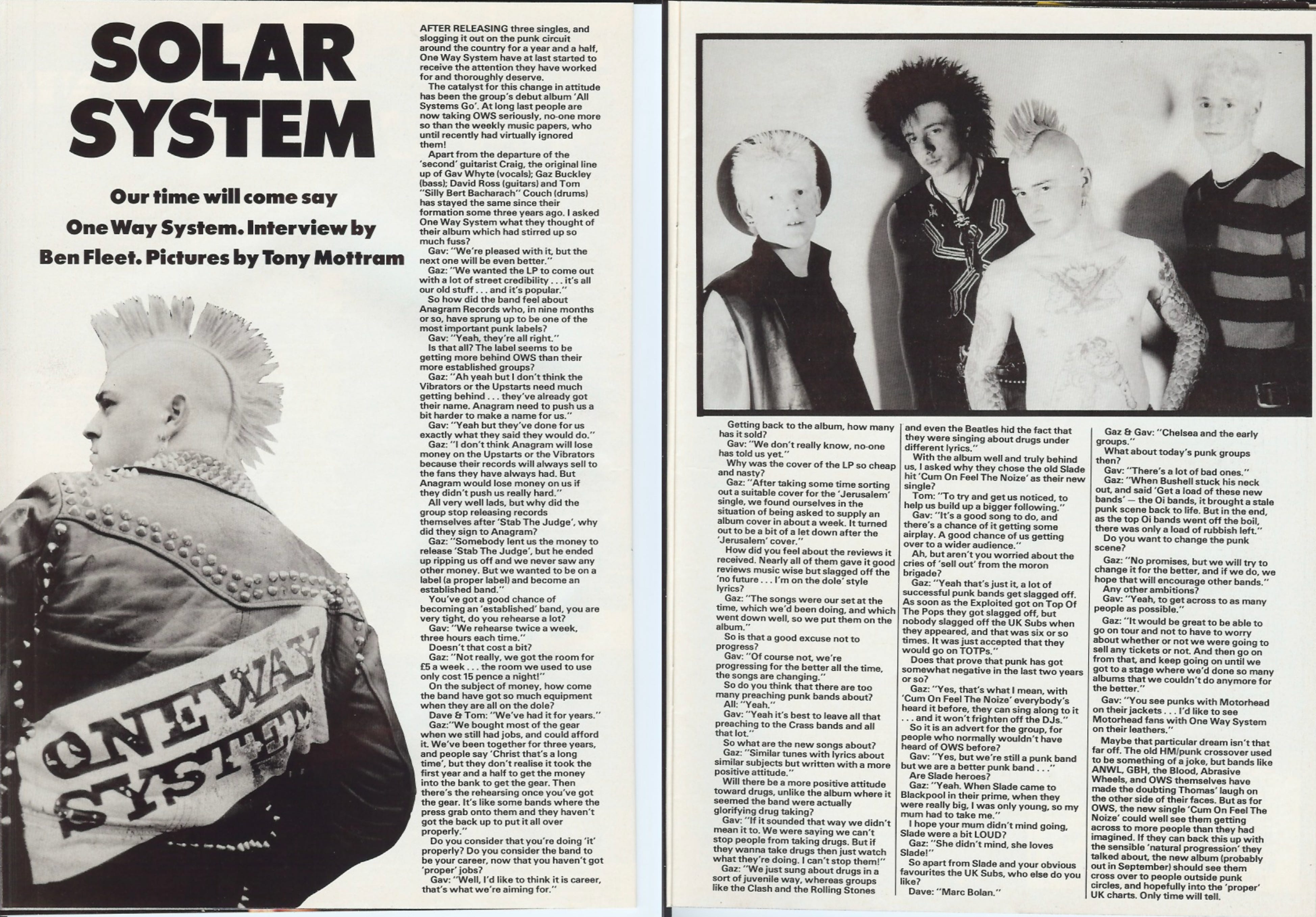
One Way System out of Fleetwood, Lancashire released their first 7”, No Entry, on Lightbeat Records in 1982. It contained what may be the punkest song of all time, “Stab The Judge.” The other two songs on the EP are greatly overshadowed, although “Riot Torn City” is a pretty sick song title. They followed with another 7” the same year that featured one of their best songs, “Give Us A Future.”
1983 was a busy year for the band to say the least. They managed to put out three 7”s and two LPs in one calendar year, each one ranging from really good to great. The band put out a final EP in 1984 called Visions of Angels, that was kind of sorry, before breaking up.




CONFLICT THE SERENADE IS DEAD (1983) VS. OMEGA TRIBE ANGRY SONGS (1983)
Conflict from Eltham in Southeast London, one of the most notable renowned anarcho bands, played their first gig in April of 1981. Conflict recorded their first 7”, The House That Man Built, for Crass Records on day before drummer Francisco “Paco” Carreno turned 16. It came out in June of ‘82 and was the beginning of a whirlwind of releases that would last throughout the majority of the ‘80s, producing multiple classics. In ‘83, they started their own record label, Mortarhate, to release their third studio EP, The Serenade Is Dead.
It’s a killer three song EP that kicks off with the title track—a perfect anarcho song that represents the best of the genre. It starts with a memorable bass intro before hitting cymbal crashes with guitar ringouts. When the first verse kicks in with Colin’s singing, it sounds so triumphant. It’s classic Conflict where it feels like he never takes a breath cuz he’s just got so much to say. “The Positive Junk” is an aggressive, UK82 style number and “The System Maintains” starts as a plodder before it explodes and pummels you until the end.
Omega Tribe from Barnet played their first gig at Monkfrith Boy’s Club during in the summer of ‘81. The band recorded their demo in ‘82 and one of the songs off it was included in the Crass Records compilation, Bullshit Detector, Volume 2. Their debut 7”, Angry Songs, followed on Crass Records in ‘83.
It’s an ambitious record for a young band. The first song, “Another Bloody Day,” starts typical enough until it cuts out around the 20 second mark for a piano part. Then the singing hits all Peter, Paul, and Mary style and when the drums and bass start accenting, it kinda sounds like ‘70s rock. “Profiteer” is a cool, swinging midtempo song that’s too long. The B-side is stronger, despite starting with a ska song called, “Is This A Future?” The bass flow is nice, they hit some spacey ‘70s parts and there’s a good chorus. The final song, “Time For Change,” is the best on the record. It’s a strong midtempo song with solid bass playing, and those parts where it’s just bass and drums give it that anarcho vibe.
They followed with an LP later in ‘83 and put out another EP in ‘84 before disbanding in ‘85.


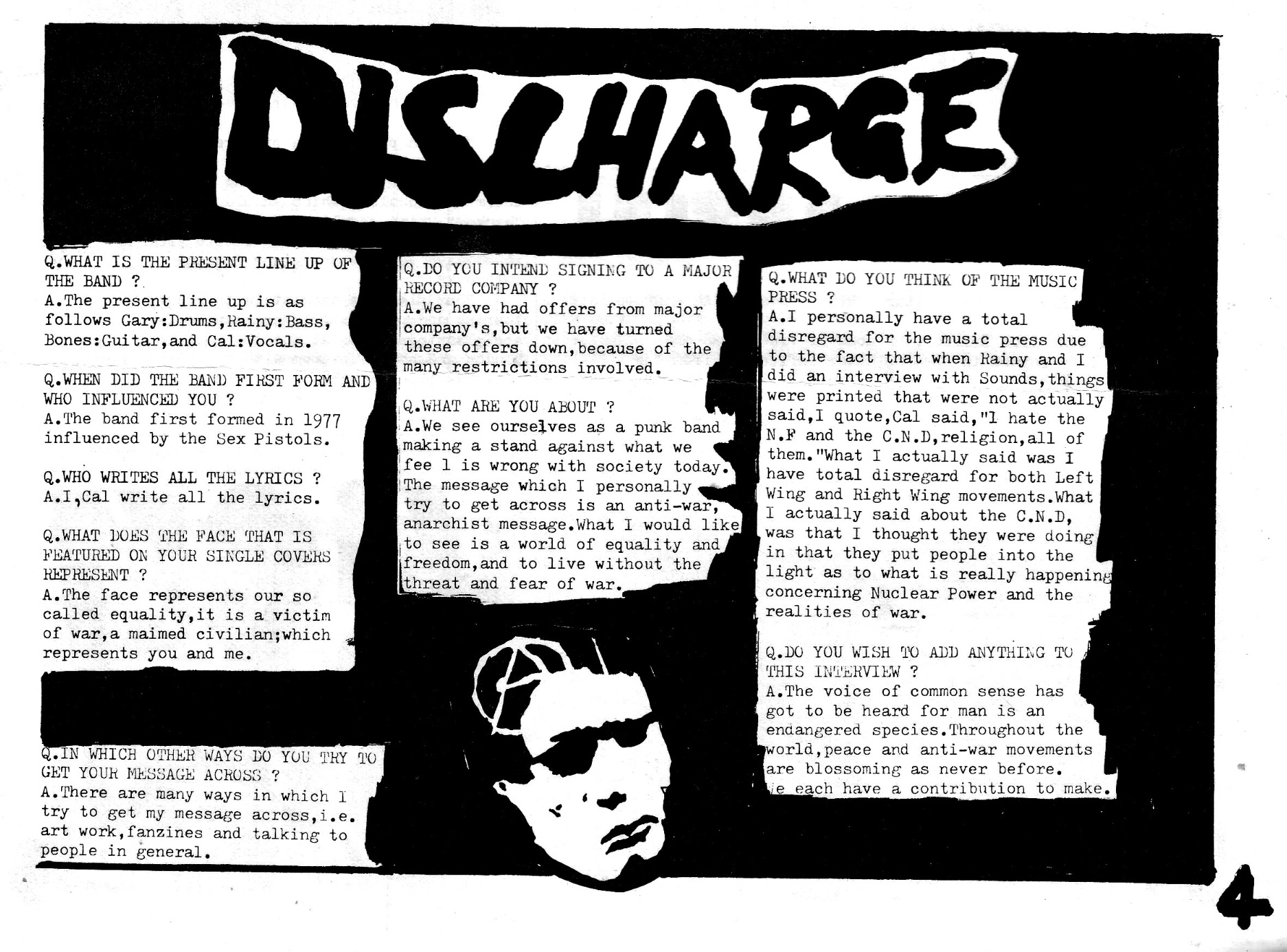
DISCHARGE NEVER AGAIN (1981) VS. DISORDER COMPLETE DISORDER 7” (1981)
If you climb on top of the roof at the next gig you attend and shout “Discharge is the greatest UK hardcore band ever,” you’ll probably just be greeted with a bunch of shrugs and “yep’s.” You didn’t need to do all that to tell us what we already know, dude. By the time the Never Again 7” came out in 1981, Discharge had already released three classic 7”s and possibly their greatest record, the 12” Why. Never Again sits in a weird spot between that 12” and their first proper full length, Hear Nothing, See Nothing, Say Nothing.
It doesn’t sound as burly as either 12”, but all three songs are excellent. “Never Again” is Discharge doing a perfect mix of their style blended with UK82. New drummer Garry Maloney, previously of the Varukers, is on the ride cymbal the entire song. Shoutout Olho Seco. “Death Dealers” is a killer midtempo banger and the 7” ends with “Two Monstrous Nuclear Stockpiles.” Not only is it possibly the best title for a Discharge song, it features some of the most apocalyptic bass playing ever laid down in a punk song sandwiched between two verses. It’s one of their coolest tracks and it barely breaks the minute mark.
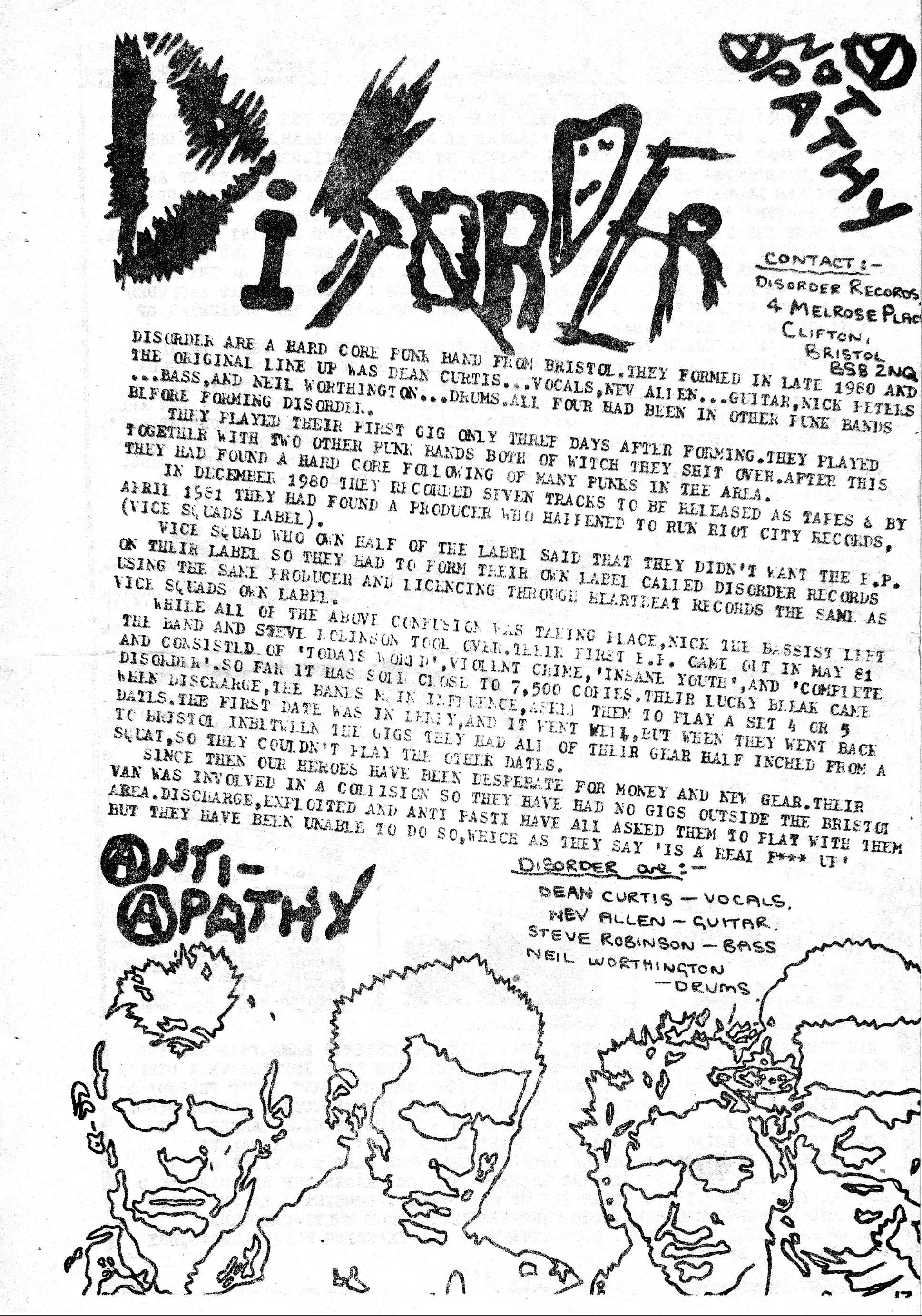
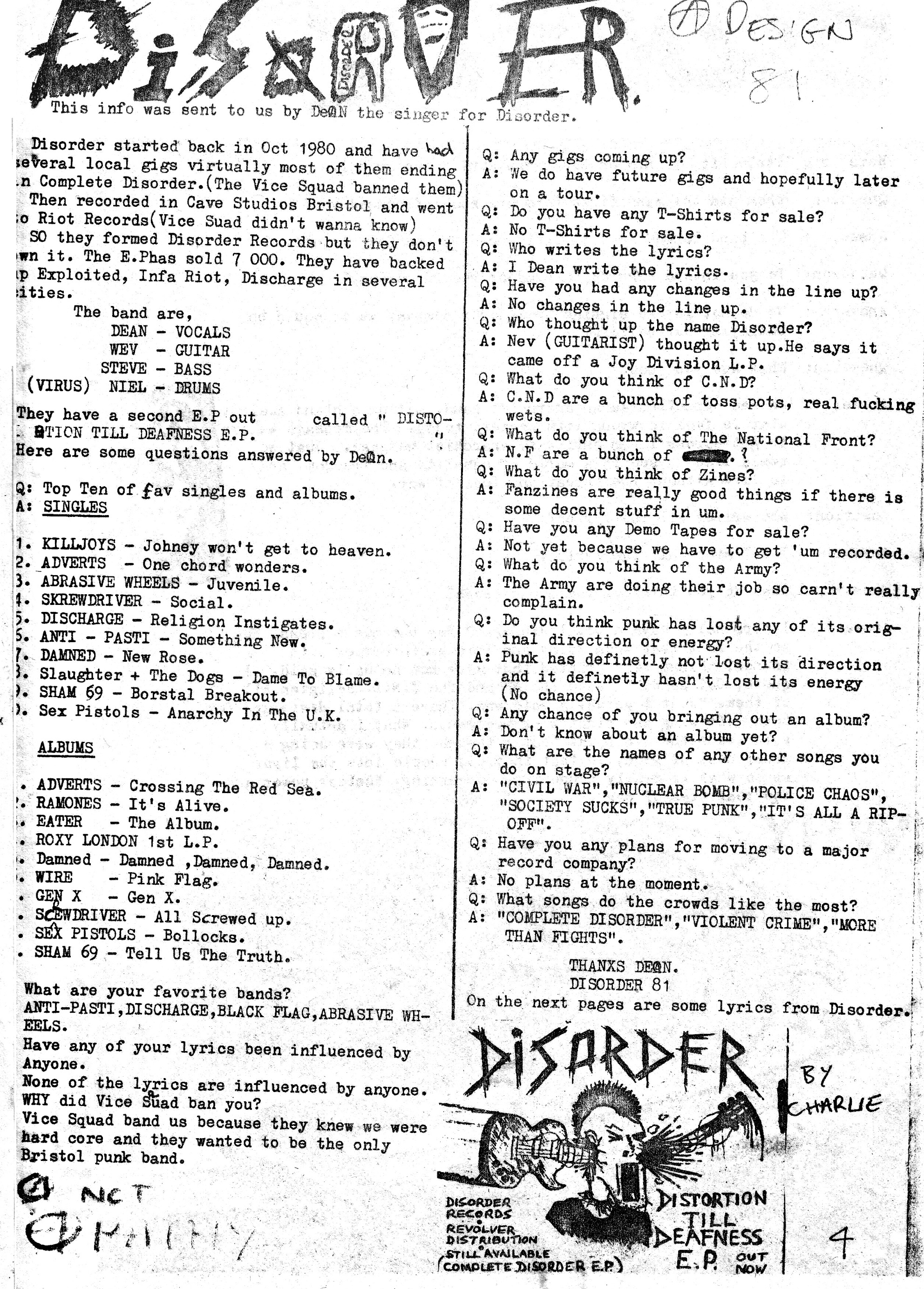
When Bristol’s Disorder presented their demo to Simon Edwards of Riot City, he didn’t think they were the right fit for the label. It makes sense, I guess. Going into ‘81, Riot City had only released records from Vice Squad and Disorder was much gnarlier. So the Complete Disorder EP came out on Disorder Records in ‘81, a Riot City sub-label.
It’s a four-song tone beast of a 7”. All of the songs are good but the first track “Todays World” is the most memorable. The guitar is super fuzzy, the recording is noisy, but the chorus is memorable and ties everything together (“todays world is now, punk is here today, if you don't like our way then fucking go away.”) The guitar starts alone on “Insane Youth” so you get to hear how sick it sounds by itself.
They followed with two more nearly as good EPs, Distortion To Deafness (1981) and the Perdition EP (1982). That’s not to say they fell off in ‘83. The Mental Disorder EP is faster, but it marked them moving away from a sound that was them to a more straight up fast hardcore style.
MAU MAUS SOCIETY’S REJECTS (1983) VS. INSTANT AGONY FASHION PARADE (1983)
Mau Maus out of Sheffield named their band after the American band, Mau Maus, who had broken up in 1980. I wonder why they didn’t just choose Led Zeppelin instead. They had been playing around town as a cover band when local promoter and Pax Records bossman, Marcus Featherby, offered them an opening slot on an Angelic Upstarts gig at the Marples Club. Soon after, Featherby booked them five hours of studio time at Kayley Studios for £50. When Mau Maus emerged from the studio, they had clocked eight tracks for an EP.
That record was Society’s Rejects, released in 1982 on Pax Records. It’s the most USHC style record of this tournament, with its high song count and short song lengths, but it’s still very straight forward UK82 style hardcore. They somehow took a genre that is already pretty much fat free and figured out how to make it even leaner. Three-chord riffs sit perfectly on top of rudimentary drumming while Chris Taylor’s burly voice snarls over the top. Every song is good and no song over stays its welcome.
The first song on the B-side, “The Kill,” also appeared on the Wargasm compilation. Their next two 7”s were great as well, No Concern (1982) and Facts Of War (1983). The latter may actually be their best, but it’s hard to choose a five-song 7” when there’s an eight-song one on the table. Facts Of War was the last record of their classic material before they were infected by the vicious musical disease, long song syndrome.
Instant Agony from Birkenhead put out their debut 7” in 1982 on the most British sounding record label of all time, Half Man Half Biscuit. It’s a killer debut with three lofi hardcore songs that never take the foot off the gas pedal. The production was bigger on the next record, 1983’s Fashion Parade, but Instant Agony still kicked just as much ass. You wouldn’t know it from the first 50 seconds of the opening track, “Fashion Parade,” that starts as a Clash-inspired ska song. But soon enough, it rings out and singer Stephen “Hocky” Hockenhull blurts out the song title in classic hardcore fashion. It then breaks into a rager.
“Anti-Police” is a tick faster and has that big, memorable chorus (“anti, anti-police”). Cool lead, too. “Dead-End Kids” starts with some single string guitar noodling before kicking into a fast UK82 style song. The chorus (“dead-end kids, dead end kids!”) over the drum rolls reminds me of “Seeing Red” by Minor Threat.
They slowed down significantly for their 1983 and 1984 7”s and broke up.


THE EXPLOITED DEAD CITIES (1981) VS. ICONS OF FILTH USED, ABUSED, UNAMUSED (1983)
It’s possible that the biggest punk band of the UK’s second wave of punk didn’t come out of London, Manchester, or even Britain at all. Perhaps that designation goes to Scotland’s The Exploited. They started in Edinburgh in ‘79 and released their first tunes, “Daily News” and “I Believe In Anarchy,” on Oi! The Album in 1980.
They had released three 7”s and their classic LP, Punks Not Dead, by the time they released the Dead Cities 7” in late 1981. Following its release, they appeared on Top of The Pops to play that tune, which chafed the jimmy of every square who was tuned in. For the rest of us, “Dead Cities” is a 10/10 track that blends the militant UK82 style drum beat with ultra-anthemic vocals. The chorus (“dead cities, dead cities”) seems to devolve to Wattie shouting “disease” by the end, perhaps an accidental commentary on urban areas becoming destitute in the days of Thatcher and Reagan.
The B-side is chocked with two more classics, a killer uptempo midtempo track, “Hitler’s In The Charts Again,” and the bass driven “Class War.” The Exploited put out their best record, the Troops of Tomorrow LP, the following year.
Icons Of Filth hailed from Cardiff, Wales and put out a demo in 1983 on Conflict’s Mortarhate records. This got the attention of Crass sub-label Corpus Cristi who offered to release their debut 7”, Used, Abused, Unamused the same year. Although more associated with the anarcho scene, Icons of Filth sound way more like Discharge than Crass. Unfortunately what they didn’t adopt from Discharge on this record was brevity. The first three songs, while killer, all break the three minute mark. The final song “Virus” shows themselves how it’s done, clocking in at a mere 1:39. If they shaved a minute off the first three tracks, this could’ve been the 8th or 9th best Discharge record of the ‘80s.
They figured it all out for their 1984 LP, Onward Christian Soldiers, where the majority of songs were significantly shorter. It was produced by their bud Pete Fender of Omega Tribe, and is one of the best hardcore punk records of 1984. They also had a song on seminal international hardcore compilation, Welcome To 1984. Two more EPs followed in ‘85 before they broke up in ‘86.


FLUX OF PINK INDIANS NEU SMELL 7” (1981) VS. G.B.H. SICK BOY 7” (1982)
Birmingham’s GBH were no doubt one of Britain’s hardcore heavyweights of the ‘80s. They played their first gig in September of 1980. By mid 1981 their demo was out, they had done a string of gigs with Discharge and signed to Clay Records. Their first record, the 12” Leather, Bristles, Studs and Acne, was released in September of 1981 and was on the indie charts for three months, peaking at #8.
1982 was a massive year for GBH. They released three 7”s and their first LP, City Baby Attacked By Rats. Sick Boy was their 2nd single of 1982. It features three of their best songs in the classic GBH style: “Sick Boy,” “Slit Your Own Throat,” and “Am I Dead Yet.”
Flux of Pink Indians out of Bishops Stortford were influenced by Crass, kinda sounded like Crass, and put out their debut single, Neu Smell, on Crass Records in 1981. The A-side has two poems that surround the excellent tune, “Tube Disaster,”—a choice, bass-driven midtempo track that’s catchy as hell (“I love tube disasters, I wanna marry a tube disaster”). The B-side isn’t quite as memorable, at least for good reasons. “Sick Butchers” is a nightmare on my ears and I’m not going to attempt to describe it. “Background of Malfunction” is back to a “Tube Disaster” style track, it just lacks a big hook. They continued to put out records through ‘86.


If you’re in the San Diego area, come see my band SUBVERSIVE INTENT and say WHATUP. Next gig:
If you enjoy the podcast or this blog, here are the ways you can support:
Spread the word
Like/rate/review the podcast wherever you listen to it
Become a Patreon. The patreons have been keeping this project a live for over seven years.
Become a paid member on Substack. I get it. You’re loyal to Substack and Patreon feels OnlyFans-adjacent. Supporting on here also gets you access to all the archives (anything over a month old) plus all the bonus pods that the Patreons get.
Recurring payment-adverse? There’s always this.
Buy the Subversive Intent LP and listen to us wherever you stream music.
Thanks for the support!
- ZN
One law for them, the Oi song everyone pretends doesn't have a line by a right wing Enoch Powell about immigration.